

High temperature at low pressure — with two new limits
Thermal oil is how a plant buys 250–330 °C without buying pressure. Saturated water at 300 °C needs roughly 87 bar; a heat transfer fluid does the same job in ordinary pipework near atmospheric pressure. That is why oil loops sit behind furnaces, dryers, presses, asphalt tanks and reactor jackets, and why a plate heat exchanger — compact, economical and easy to size close to duty — is attractive wherever that heat must be handed over to water, air or process. Thermal oil, however, imposes two limits that a water duty never raises: the elastomer that seals the plate pack, and the temperature of the oil film right at the plate wall. The first decides the construction; the second decides whether the pack fouls gently or cokes itself to death. This article works through both, and shows where each construction type fits.
The seal limit: elastomers versus bulk oil temperature
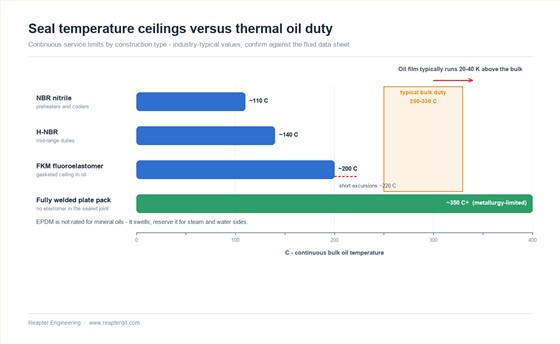
A gasketed plate heat exchanger is sealed by rubber, and rubber has a ceiling. In hot oil service the industry-typical continuous limits are approximately:
| Seal or construction | Continuous ceiling in hot oil | Practical note |
|---|---|---|
| NBR nitrile | ≈110 °C | Preheaters, coolers and other low-temperature positions |
| H-NBR | ≈140 °C | Mid-range duties; confirm compatibility with the specific fluid |
| EPDM | — | Not rated for mineral oils — it swells; steam and water sides only |
| FKM fluoroelastomer | ≈200 °C | The practical ceiling of gasketed construction in oil; short excursions to ≈220 °C; grades differ, so check the fluid data sheet |
| Fully welded plate pack | ≈350 °C+ | No elastomer in the sealed joint; limited by plate metallurgy, not rubber |
The arithmetic is unforgiving. A fluid bulk temperature of 300 °C exceeds every elastomer in the table by a wide margin, so above roughly 200 °C bulk the gasketed pack is out and the discussion moves to welded construction. Between 140 and 200 °C the gasketed pack lives or dies on FKM quality and fluid compatibility — a choice to make with the fluid supplier's data sheet in hand, not by habit.
Why oil runs laminar — and why the wall sees worse than the bulk
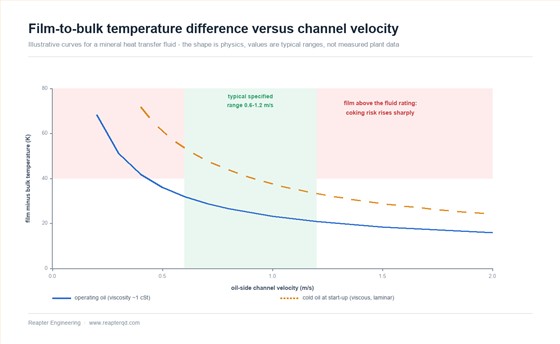
The second limit follows from how oils behave. A mineral heat transfer fluid is thick when cold — commonly 20–40 cSt at 40 °C — and thin when hot, approaching the viscosity of water near 1 cSt at 300 °C. Reynolds numbers in a plate channel therefore stay low compared with water duties, and the oil side runs at or near laminar flow for much of its life. A thick boundary layer does two things at once: it strangles the film coefficient, so the pack needs more area for the same duty, and it means the oil film at the plate wall runs measurably hotter than the bulk fluid, because heat must pass through that slow-moving layer.
Thermal fluid suppliers rate their products by film temperature, typically 20–40 K above the permitted bulk maximum, precisely because the wall film is where the oil actually decomposes. Cracking, oxidation and coking all start there. A duty that looks safe on bulk temperature alone can already be past the film limit where the oil touches the plate.
Coking: fouling that feeds itself
Oil-side fouling in thermal service is not scaling. It is thermal cracking: the film overheats, heavy molecules break down, and a hard carbonaceous layer grows on the hot wall. What makes it dangerous is the feedback. The coke layer is itself an insulator, so the wall runs hotter underneath it, the film temperature rises, and the cracking accelerates. Fouling in a water circuit tends toward a steady state; coking in an oil circuit is autogenous — left alone it runs away until the duty collapses or a plate is ruined. The practical defence is to keep the film below the fluid's rating, and the film is governed mainly by one variable the designer controls: channel velocity.
Keeping the film cool: velocity is the design lever
The figure above is illustrative, but the shape is physics: the film-to-bulk difference falls steeply as velocity rises and the boundary layer thins. Below about 0.2 m/s the film can run 60–70 K hotter than the bulk; at 1.0 m/s the difference is roughly 20 K on an oil at operating viscosity. Three design habits follow:
- Specify 0.6–1.2 m/s on the oil side of a gasketed pack as the working range, and accept the pressure drop that comes with it — 20–50 kPa is a sane allocation for a plate pack on oil duty.
- Choose high-chevron (hard) plates for oil. A higher chevron angle trades pressure drop for turbulence and a thinner boundary layer — exactly the trade an oil duty wants.
- Never throttle the oil side to "hold" temperature. Reducing oil flow raises the film difference faster than it changes any control variable, and it is the most common self-inflicted route to a coked pack. Modulate the cold side instead, or bypass in a way that keeps oil velocity up.
A coarse strainer ahead of the pump — and a finer one downstream of the exchanger where the circuit generates debris — completes the picture. Coking debris that circulates can block channels and erode gasket grooves, turning a thermal problem into a mechanical one.
When to step up to welded construction
Construction follows the seal table, with two extra inputs: fire exposure and cleanliness.
| Condition | Sensible construction | Why |
|---|---|---|
| Bulk ≤ 140 °C, clean circuit | Gasketed, NBR or H-NBR seal | Full serviceability — plates and gaskets cleanable and replaceable |
| Bulk 140–200 °C | Gasketed, FKM seal, fluid compatibility verified | Keeps serviceability while the elastomer sits comfortably inside its rating |
| Oil ≤ 200 °C, water or steam hotter on the other side | Semi-welded, with the oil in the welded cassettes | The elastomer never sees the oil; the gasketed side handles the water |
| Bulk > 200 °C | Fully welded pack or plate-and-shell | No elastomer holds the bulk temperature, let alone the film |
| Leak path near a hot surface, or flammable-process buildings | Welded construction regardless of temperature | A weeping gasket on oil above its flash point is a fire, not a maintenance item |
Brazed packs appear in oil duties too, and many oils suit them, but they cannot be opened: no mechanical cleaning, no gasket renewal, no plate inspection. They are a fair choice only where the fluid runs clean and the circuit is protected by strainers — the same cleanliness condition that coking punishes hardest.
Start-up, venting and shutdown discipline
Most film-temperature damage in real plants is procedural, and it happens in the first hours of a commissioning or restart:
- Degass before you heat. Water left in an oil loop flashes to steam at 100 °C with roughly 1,600 times its liquid volume. Ramp through the 100–130 °C band slowly with vents open until the stream runs solid and quiet.
- Never start against a throttled oil side. Cold oil is at its most viscous and most laminar; the film difference is at its worst exactly when the pack is cold. Establish full flow first, then raise temperature.
- Blanket the expansion tank with nitrogen wherever hot fluid meets air. Oxidation thickens the oil and lowers its flash point; most sludge problems in oil loops are oxidation problems.
- Insulate hot joints and fit drip pans under any gasketed connection in a heated area. This is cheap fire engineering even on a welded pack.
- On shutdown, keep the oil circulating until the film has cooled out of the cracking range; stagnant oil against a hot wall is where carbon grows between shifts.
Common questions
Can a gasketed plate heat exchanger ever run 300 °C oil? No. No elastomer holds 300 °C bulk, and the film runs hotter still. Above roughly 200 °C bulk the answer is a fully welded pack or a plate-and-shell unit; the plate-area logic survives, the seal construction changes.
Is oil fouling the same as water-side scaling? No, and the difference matters for cleaning. Scaling tends toward a steady state; coking accelerates under its own insulation. A coked pack usually needs chemical cleaning and, if the layer is heavy, plate replacement — which is why the design should prevent coking rather than plan to clean it.
Why does the oil-side duty collapse during cold start-up, then recover? Cold oil is far more viscous, the oil side drops deep into laminar flow, and the film coefficient collapses with it. The pack is not mis-sized; the fluid has simply not warmed up. Ramp flow and temperature together and the duty returns.
Does a higher design pressure solve any of this? No. Film temperature is a heat transfer and fluid-property problem, not a strength problem. Extra pressure rating adds cost and leaves the coking mechanism untouched.
Conclusion
Thermal oil puts high temperature within reach of ordinary plant, and a plate heat exchanger is usually the most economical way to hand that heat over. Two limits govern the choice: the elastomer ceiling, which decides between gasketed, semi-welded and welded construction, and the oil film temperature, which velocity, plate selection and start-up discipline decide. Reapter supplies gasketed, semi-welded and fully welded plate heat exchangers and supports operators worldwide with thermal-duty sizing reviews, replacement plate packs and gaskets for all major frames. If you are specifying an exchanger for a thermal oil loop, send us the fluid, the bulk and outlet temperatures and the flow on both sides; our engineers will check the film margin and propose the construction that fits. Contact us for a thermal oil duty review.
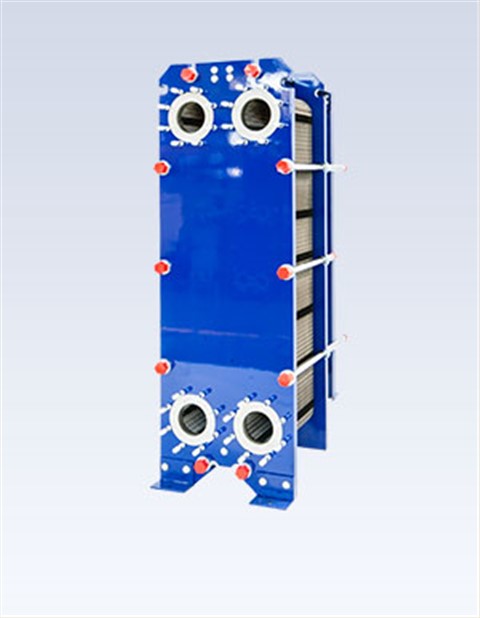 Food grade plate heat exchanger
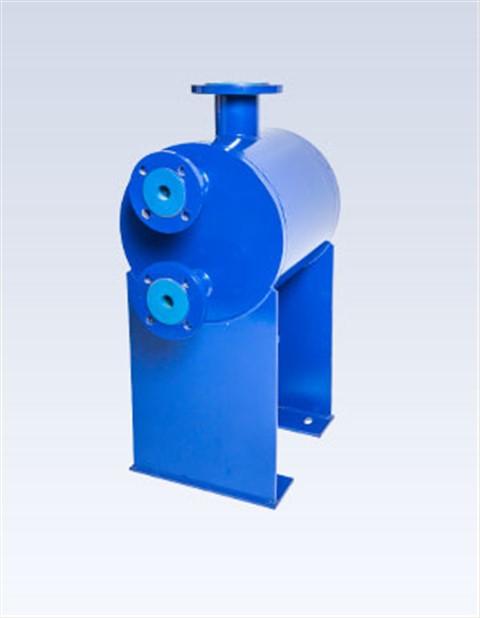 Plate And Shell Heat Exchanger