

Aplate heat exchangerhandling water is doing what the product was built to do. Put steam through the same unit and the behaviour changes: the approach temperature no longer matches the calculation, and condensate pools in the lower section instead of draining. Building complete units, we find that when steam service goes wrong, the problem is usually not the heat transfer area. It is thepressure drop.
This article deals with one point: what role pressure drop actually plays when a plate heat exchanger is used for phase-change duty (condensation or evaporation), why heat transfer and pressure drop have to be calculated together, and the layout rules that cannot be skipped.
Contents
- Steam and water: the difference is not temperature, it is phase
- Plate condensers and plate evaporators: two directions
- Pressure drop moves the mean temperature difference in opposite directions
- Estimating pressure drop in a plate condenser: four factors
- Heat transfer and pressure drop have to be solved together
- Layout rules that cannot be skipped
- Preheating and evaporating sections in one unit
- Frequently asked questions
1. Steam and water: the difference is not temperature, it is phase
Hot water gives up heat by cooling down. The temperature falls, and the heat is transferred. That is sensible heat.
Steam gives up heat mainly by condensing. Vapour becomes liquid, and what it releases is latent heat. Through the condensation process the temperature stays almost constant; what moves is pressure and vapour quality — and both differ from one point along the channel to the next. This is the fundamental difference between phase-change duty and single-phase duty.
The plate heat exchanger category was originally developed for liquid-to-liquid duty. Early attempts to use liquid-to-liquid plate patterns for phase change performed reasonably well; plate heat exchangers designed specifically for phase-change duty only began to appear in the 1960s.
Once phase change is involved, however, the mechanisms behind heat transfer and pressure drop become considerably more complex than in single-phase service, with many more influencing factors. The same plate is not governed by the same calculation when it carries water and when it carries steam.
A plate evaporator unit with a large steam-side port flange — ports and channels in phase-change units differ from standard liquid-to-liquid plates (photo: REAPTER)2. Plate condensers and plate evaporators: two directions
There are two kinds of phase change in a plate heat exchanger: condensation (as a condenser) and boiling (as an evaporator).
Plate condenser
This falls into the category of forced-flow condensation inside channels, but with a more complex flow pattern. Condensation of steam has a useful feature: it is generally completed within a single pass, rather than needing multiple passes the way liquids do.
Plate evaporator
The boiling heat transfer coefficient depends on velocity, physical properties, boiling temperature difference and void fraction, and the flow morphology is more varied and more complex.
One point is easily overlooked: the heat transfer correlations for the two differ substantially, and they do not even consider the same set of influencing factors. Applying one set of coefficients across the board will not give an accurate result.
3. Pressure drop moves the mean temperature difference in opposite directions
Starting with the conclusion:pressure drop in an evaporator actually tends to increase the mean heat transfer temperature difference, while pressure drop in a condenser tends to reduce it.The two directions are exactly opposite.
The reasoning is not complicated. The evaporating side is the side being heated, so a pressure drop lowers its saturation temperature and the gap to the hot side widens. The condensing side is itself the heat-releasing side, so a pressure drop lowers the condensing temperature and the gap to the cold side is squeezed smaller.
That is why, when calculating a condenser, pressure drop is a net loss: it is deducted from the temperature difference available to you. It is also why, when we select units for steam service, we would rather leave the allowable pressure drop ample than force the area to make up for it.
One rule applies to both sides:allowable pressure drop is always a hard constraint.For a given plate pattern, how much condensing duty the unit can deliver depends mainly on how much pressure drop you allow — and the same holds for an evaporator.
Condenser vs. evaporator: how pressure drop affects the mean heat transfer temperature difference| Item | Plate condenser (condensation) | Plate evaporator (boiling) |
|---|---|---|
| Role of phase-change side | Heat-releasing side | Heated side |
| Effect of pressure drop | Reduces the mean temperature difference | Increases the mean temperature difference |
| Engineering implication | Pressure drop is a net loss, deducted from the available temperature difference | Pressure drop does not directly consume temperature difference |
| Shared hard constraint | Allowable pressure drop determines the condensing/evaporating duty achievable; the phase-change side is normally arranged in a single pass | |
4. Estimating pressure drop in a plate condenser: four factors
For a given plate pattern, the condensing pressure drop in aplate heat exchangerdepends on four things:
- the mass velocity of the steam in a single channel;
- the average vapour quality of the condensing steam in the channel;
- the relative flow direction of steam and cooling medium (parallel or counter-current);
- the average pressure at the steam inlet and outlet.
Two-phase pressure drop is predicted in engineering practice using methods of the Lockhart-Martinelli type.
There is also a commonly used empirical relationship: the total pressure drop of a plate condenser is roughly 1.1 to 1.6 times the two-phase frictional pressure drop. These are industry empirical values rather than a measured guarantee from any one supplier, so selection still has to come down to the design calculation for the specific plate pattern.
5. Heat transfer and pressure drop have to be solved together
In condensing calculations, heat transfer and pressure drop influence each other and are closely coupled, so they often have to be solved jointly. That is what makes phase-change duty more troublesome than single-phase duty.
One shortcut is common in the industry: back-calculating the area from an empirical estimate of the heat flux. The accuracy is low, it cannot predict how operating parameters will behave once conditions change, and pressure drop is not estimated at all. Units selected that way cannot deliver their performance, and the advantages of a compact, high-efficiency design are lost.
Our position is straightforward: in selecting a phase-change unit, pressure drop has to be put on the table and calculated. Area alone is not enough.
6. Layout rules that cannot be skipped
- The phase-change side is normally arranged in a single pass(evaporators sometimes use rising and falling films within one channel).
- A fluid undergoing phase change should enter at the top of the plate pack and leave at the bottom— so that condensate can drain. Condensate sitting in the channel occupies heat transfer surface and pushes pressure drop up.
- Parallel or counter-current?In phase-change service the effect of these two arrangements on the mean temperature difference is smaller than in single-phase service, but pressure drop is closely tied to flow direction. So for phase change, look at pressure drop first and the temperature difference second. Single-phase duty is the other way round — counter-current gives the larger temperature difference, so it is preferred there.
- Be cautious with multiple passes:at a given allowable pressure drop, multiple passes reduce the pressure drop available to each pass and force the velocity down, which works against heat transfer; with an unequal number of passes on the two sides, the mean temperature difference shrinks noticeably as well.
7. Preheating and evaporating sections in one unit
In an evaporation process, if the preheating section and the evaporating section are placed in the same heat exchanger, attention has to be paid to the temperature profile along the flow path. With poor design, the heat transfer in the preheating section is very low.
This is also why phase-change units depend more on proper calculation than liquid-to-liquid units do — you cannot simply pick an area and be done with it.
Frequently asked questions
Can a plate heat exchanger be used as a steam condenser directly?
Yes. The plate heat exchanger category was originally developed for liquid-to-liquid duty, and early units used for phase change performed reasonably well. But to get the full performance out of the unit, it has to be recalculated for phase change — pressure drop in particular.
Why not arrange multiple passes on the steam side, as we would on the water side?
The phase-change side is normally single pass. Multiple passes reduce the allowable pressure drop per pass and lower the velocity, and condensate is more likely to accumulate.
What happens if condensate cannot drain properly?
Condensate occupies the heat transfer surface in the channel: duty falls and pressure drop rises. In layout terms, the phase-change fluid has to enter at the top and leave at the bottom — that is the basic requirement for condensate drainage.
From the manufacturing side: channel consistency shapes the pressure drop profile
We build complete units, and we manufacture both the plates and the gaskets ourselves. Phase-change units depend more on channel consistency than liquid-to-liquid units do: the more uniform the cross-section of every flow channel, the more evenly the pressure drop is distributed as steam passes through, and the more readily condensate drains. In plate pressing we hold thickness tolerance to ±0.02 mm and gasket groove depth tolerance to within ±0.03 mm; gasket thickness deviation is 0 to 0.1 mm (the corresponding requirement in NB/T 47004.1-2025 is 0 to 0.2 mm). These are REAPTER internal control standards.
Units on the shop floor — plate heat exchangers for steam condensing and evaporating duty (photo: REAPTER)If you are replacing a steam unit from an imported brand, send us three things: model, centre distance and overall dimensions, and we will work to the corresponding specification.
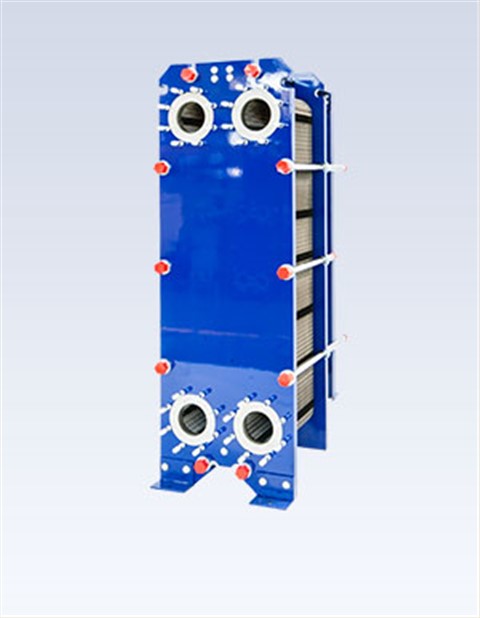 Food grade plate heat exchanger
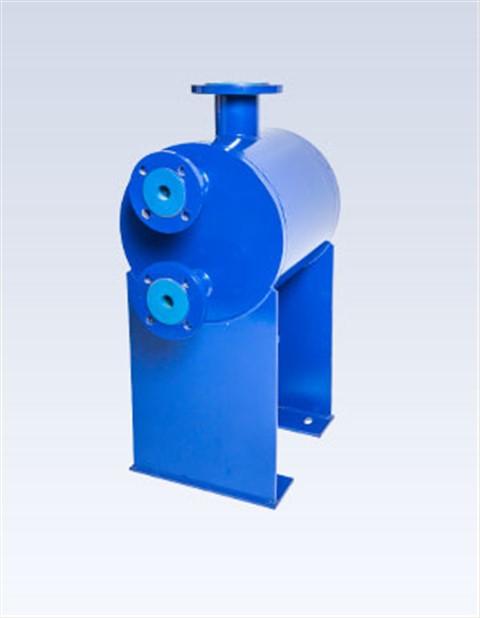 Plate And Shell Heat Exchanger