

Seawater turns a thermal selection into a materials decision
Plate heat exchangers are an obvious fit wherever seawater, brackish water or brine takes heat away: they reach a close temperature approach in a small footprint, they open up for mechanical cleaning, and spare plates and gaskets can be held locally instead of shipping a whole unit. That is why they cool engine jackets on ships, condense process vapours in coastal plants, and sit in the chilled-water loops of desalination and fish-farming sites from the North Sea to Southeast Asia.
But the duty is unforgiving in a way that district heating or closed cooling loops are not. Chloride attacks stainless steel locally and without much warning, and the usual failure is not a blocked channel that shows up as rising pressure drop — it is a pinhole that quietly puts one medium into the other. By the time the fault is visible in the product or the process, the material decision made months or years earlier at the quotation stage has already been made for you. On this duty, the material choice is not an optimisation. It is the design.
What chloride actually does to a stainless plate
Stainless steel owes its corrosion resistance to a thin oxide film that repairs itself instantly in clean, oxygenated water. Chloride breaks that defence locally. Where the film is weakest, chloride ions penetrate it and a small pit forms; the chemistry inside the pit becomes acidic and chloride-rich, which accelerates the attack further. The result is a perforation, not a general thinning — a plate can look sound almost everywhere and still leak.
The most vulnerable place on a plate pack is not the open surface. It is the crevice under the gasket groove and along the gasket contact line, where circulation is poor. In a crevice, oxygen is consumed faster than it is replenished, chloride concentrates, and pH drops — the exact conditions that break down the passive film. This is why crevice-corrosion limits sit well below pitting-corrosion limits for the same alloy, and why a plate that survives its first year in open flow can still fail under the gasket in its second.
Temperature is the accelerant. Attack that is negligible at 20 °C becomes aggressive as the metal gets hotter, which is why standby periods matter: an idle exchanger on a hot deck, or a brine circuit left static in a machine room, can corrode faster than the same pack at full flow. A crossover that appears "only in summer" is rarely a coincidence.
The material ladder, and where each rung stops
Plate materials form a ladder, and each rung buys more chloride and temperature capability at a higher price per square metre.
- 316L — the economic default for fresh water and low-chloride brackish duties. Comfortable below roughly a few hundred mg/L of chloride at moderate temperatures; at seawater concentrations it is outside its limits for anything above cold service.
- Duplex 2205 and 2507 — higher strength allows thinner plates, and the alloying gives a real step up in chloride resistance. Widely used for estuarine water and for brine circuits at elevated temperature.
- Super austenitic grades (904L, 254 SMO and equivalents) — bridge the gap between duplex and titanium; used for hot brackish water and seawater at moderate temperature.
- Titanium — the practical end of the ladder. Its oxide film re-passivates instantly, even inside crevices, and it is effectively immune to chloride pitting across the whole chart. It is the default for once-through seawater duty.
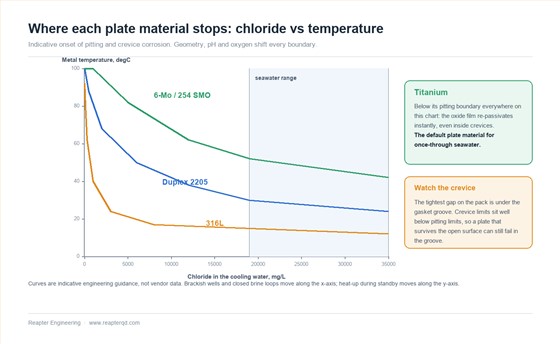
The boundaries in the chart are indicative, not vendor data: crevice geometry, pH, oxygen content and sediment all shift them. They are still enough to rank a duty. A cooling tower circuit at a few hundred mg/L is a 316L conversation. An estuarine intake at 5,000 mg/L belongs to duplex. An open seawater intake at up to 35,000 mg/L belongs to titanium, full stop.
Titanium is the seawater default, not a luxury
Titanium plate costs more than stainless, and on marginal duties it is tempting to save the money. The argument for paying it is straightforward. Titanium's protective film is stable in chloride concentrations far beyond seawater, so the pitting and crevice mechanisms that end a stainless plate's life simply do not run. Its high strength allows thin plates, which recovers some of the cost and keeps thermal performance high. And titanium resists erosion, so it tolerates the velocities needed to keep sediment moving in an open intake.
The saving from a lesser material evaporates the first time a pack has to be opened for a perforated plate two years into its expected life: replacement plates, gaskets, labour and downtime on a seawater circuit usually cost more than the original material premium. Where 316L or duplex is still the right call — cool, low-chloride, well-treated circuits — the duty chart makes that defensible too. The error to avoid is specifying by habit in one direction or the other.
Brines and secondary coolants are not automatically safe
A closed brine or glycol loop looks gentler than an open sea intake, and it can be — but it corrodes in its own way. Sodium chloride and calcium chloride brines put the plates in exactly the chloride regime the chart describes, and calcium chloride in particular turns aggressive when diluted with ingress water. Ethylene and propylene glycol circuits are only as protective as their inhibitor package: degraded glycol produces organic acids, and any air ingress at pumps and glands feeds oxygen into the loop. Temperature completes the picture, because closed loops often run hotter than their operators assume at the design stage.
The practical discipline is the same as for seawater, with two additions. Test the circuit regularly — chloride content, inhibitor reserve and pH — rather than assuming the fill charge is still intact. And treat a stagnant shutdown as part of the duty: a brine loop that sits full and idle between seasons corrodes in its quietest hours.
Design details that decide the service life
Material is the headline, but several details decide whether a well-chosen material actually lasts.
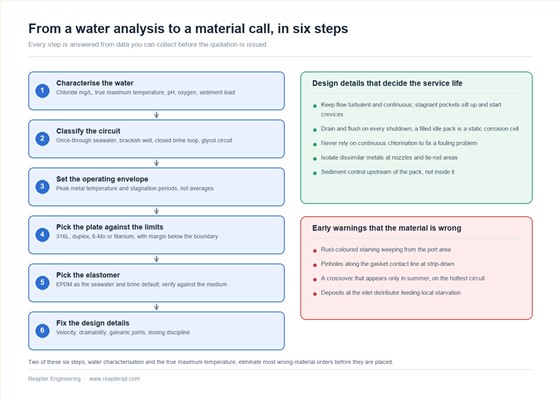
- Velocity. Keep flow turbulent and continuous. Stagnant pockets silt up, and the sediment under the deposit starts exactly the crevice chemistry described above. Very low flows on the seawater side do more damage than high flows.
- Drainability. On shutdown, drain and flush both sides. A pack left full is a static corrosion cell with time to work.
- Dosing discipline. Chlorination controls marine growth in open circuits, but over-dosing creates an oxidising environment that attacks the plates; never use biocide dosing as a substitute for velocity and cleanliness.
- Galvanic pairs. Keep dissimilar metals isolated at nozzles and connections, and be deliberate about what sits upstream: a copper-alloy component feeding seawater into a titanium pack changes the surface chemistry of the whole circuit.
- Gaskets. EPDM is the standard elastomer for seawater and brine duty; match the gasket to the medium the same way the plate material is matched, and carry the gasket specification into every replacement order.
A practical selection sequence
- Characterise the water. Chloride in mg/L, true maximum metal temperature, pH, oxygen and sediment load. One sample taken at the wrong moment is not data; take the worst case you operate.
- Classify the circuit. Once-through seawater, brackish well water, closed brine loop or glycol circuit — each moves the decision along the chart differently.
- Set the operating envelope. Peak temperature and stagnation periods, not annual averages. The material sees its worst hour, not its average year.
- Pick the plate against the limits. Choose 316L, duplex, 6-Mo or titanium with margin below the boundary, and let the chart — not habit — make the call.
- Pick the elastomer. EPDM as the seawater and brine default, verified against the actual medium.
- Fix the design details. Velocity, drainability, galvanic isolation and dosing discipline, agreed before the unit is built rather than after it leaks.
Common questions
Can 316L plates ever be used with seawater? Only in cold service and only with clean, well-circulated water, and even then the margin is thin because crevice limits sit well below pitting limits. For continuous seawater duty the practical answer is no; specify titanium or a high-alloy grade.
Is titanium worth it for a closed brine loop? Often not — a closed, inhibited circuit at moderate chloride can be a duplex application. The decision comes from the water analysis and the true maximum temperature, not from the word "brine".
Why did our exchanger pass two years and then leak at the gasket line? Crevice corrosion is cumulative. Chloride concentrates in the tightest gaps over many shutdown and heat-up cycles until the film breaks down locally. A failure at the gasket contact line is the classic signature of a material running above its crevice limit.
Does fouling cause corrosion, or only performance loss? Both. A deposit is a crevice: under it, oxygen is starved, chloride concentrates and pH drops. Fouling that is merely inconvenient in fresh water can start perforation in seawater.
What should a replacement order specify for a seawater unit? The installed plate material and thickness, the corrugation pattern, the plate count, and the elastomer specification — a part made to the installed pattern is the only part that fits, and substituting the material changes the unit's corrosion life.
Conclusion
Seawater and brine duties reward the projects that treat material selection as an engineering step rather than a price line: characterise the water, respect the chloride-temperature limits, choose the elastomer with the same care, and hold the design details that keep a sound material sound. Reapter supplies gasketed plate heat exchangers and replacement plates and gaskets for marine, coastal and brine applications, and supports operators worldwide with duty-based material advice, spare-part matching and re-rating studies for existing packs. If you are specifying for a seawater or brine duty, send us the water analysis and the operating envelope — contact us for a quotation or a second opinion on an existing selection.
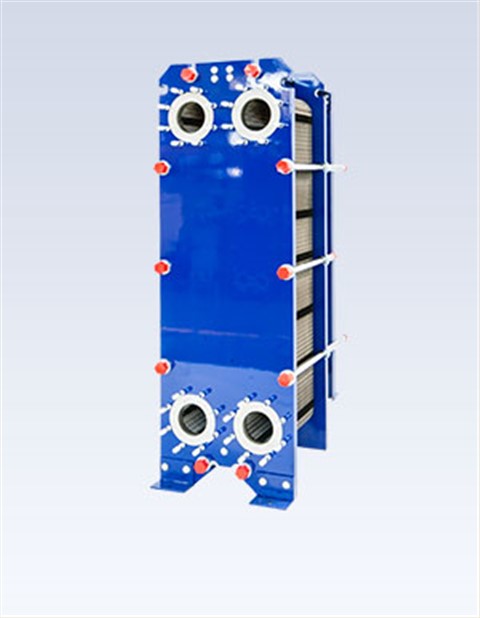 Food grade plate heat exchanger
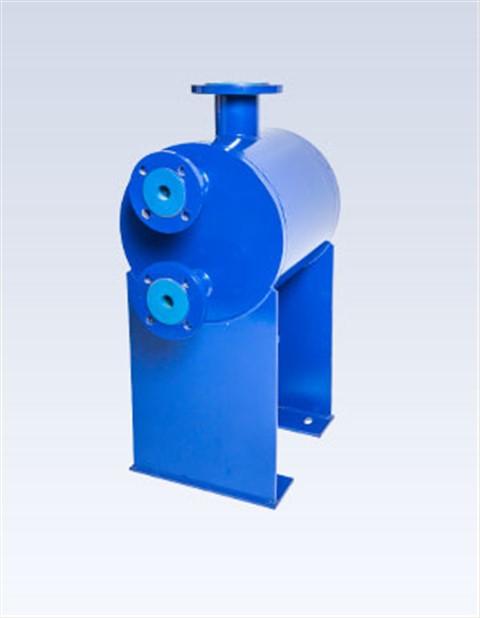 Plate And Shell Heat Exchanger