Heat Station Plate Heat Exchangers: Design & Application

Heat exchanger station supporting plate heat exchanger is the main equipment for heat exchange in the heat exchanger station, which together with the circulation pump, decontaminer, charge pump, control valve, metering table, etc. form a complete set of heat exchange system to provide assistance for central heating, bringing warmth to thousands of households. So, do you know? In the operation and use of the process there are some points that must be noted, not treated lightly, these include the following points.
Most of the heat exchanger station supporting plate heat exchanger is required for heating, so mainly in the north, the heating season also has a number of. Therefore, before using the equipment, should check whether the clamping bolts are loose, the size is not calculated in accordance with the instructions said, such as not in line with the provisions, should be evenly tighten the bolts to reach the required size, so that it is not easy to go wrong.
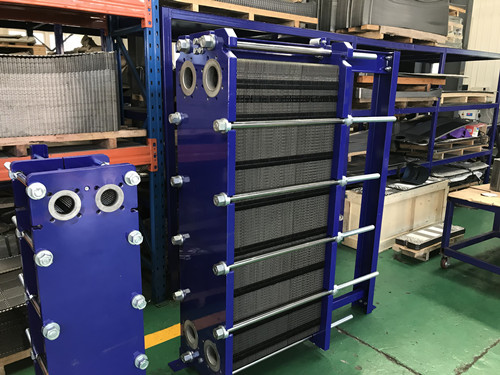
Secondly, it is before using the equipment should be water pressure or air pressure test, separate test pressure on both hot and cold sides, the test pressure is 1.3 times the operating pressure, holding time of 30 minutes, each sealing parts without leakage before putting into use. For some dirty water conditions, it is necessary to install a pre-filter, which can ensure that the media entering the heat exchanger will not be blocked, reducing energy efficiency. All start-up and shutdown must be done slowly, do not operate blindly, all in accordance with the instructions.
Heat exchanger station supporting plate heat exchanger is an important product of Qingdao Ripert involved in more heat exchange projects, because it is related to the people's livelihood of the country, or to put it in layman's terms is related to everyone's winter heating problems. At this point, the quality of solid, stable performance, high heat transfer efficiency, long service life and other qualities must be guaranteed, because only in this way can win the market's extensive trust.
Related information
- Customized processing of wide gap plate heat exchanger
- What are the pressure and temperature requirements for stainless steel plate heat exchangers?
- Plate Heat Exchanger Corrosion Analysis
- Free-Flow PHE for Glucose Heat Transfer
- When purchasing plastic plate heat exchanger gaskets, you will lose when you only focus on prices.
- Are the plates of SS304, 316L, Hastelloy, and titanium unclear? Large heat exchanger manufacturers tell you the answer
Relevant article
- Chemical Plate Heat Exchanger: Lubricant Roles & Care
- Heat Station Plate Heat Exchangers: Design & Application
- Heat Station Plate Heat Exchangers: Installation Guide
- Boiler Plate Heat Exchangers: Maintenance Guide
- The Integrated Heat Exchanger Unit: An Efficient Integration and Intelligent Control Solution for Thermal Energy Conversion
- Sulfuric Acid Plate Heat Exchangers: Design & Application
- Coal Chemical Plate Heat Exchangers: Cleaning & Maintenance
- Petrochemical Plate Heat Exchangers: Design & Application
- Chemical Plate Heat Exchangers: Gasket Ageing
- Sulfuric Acid Plate Heat Exchangers: Design & Application
Latest information
- Chemical Plate Heat Exchanger: Lubricant Roles & Care
- Heat Station Plate Heat Exchangers: Design & Application
- Heat Station Plate Heat Exchangers: Installation Guide
- Boiler Plate Heat Exchangers: Maintenance Guide
- The Integrated Heat Exchanger Unit: An Efficient Integration and Intelligent Control Solution for Thermal Energy Conversion
- Sulfuric Acid Plate Heat Exchangers: Design & Application
- Coal Chemical Plate Heat Exchangers: Cleaning & Maintenance
- Petrochemical Plate Heat Exchangers: Design & Application
- Chemical Plate Heat Exchangers: Gasket Ageing
- Sulfuric Acid Plate Heat Exchangers: Design & Application