Industrial Plate Heat Exchangers: Custom Design

Industrial plate heat exchanger customization refers to the specific working conditions, the overall heat transfer solution proposed. Simply put, it is to propose a set of programs to make it in the face of complex working conditions, the media composition of complex performance can also achieve heat transfer, to meet the use of the expected results. To achieve this effect is not easy, and some of these points need to be major.
The purpose of the industrial plate heat exchanger customized is to meet the use of the entire working conditions, it is not a standard part, so in the design and manufacturing process some issues need to pay attention to. For example, the media. The physical parameters of the media need to pay particular attention to the two sides of the two points, the first point is to the main it is the heat transfer coefficient, that is, how to make it a better heat transfer effect, the second point is for its performance targeted selection of the corresponding material, so that to a large extent to avoid corrosion, perforation, leakage and other problems. Another example is the matching, many people care about is that can be with the existing pipeline, can be with the purchase of other machines to reach a fit, so that the whole system runs without pressure, the overall effect is also better.
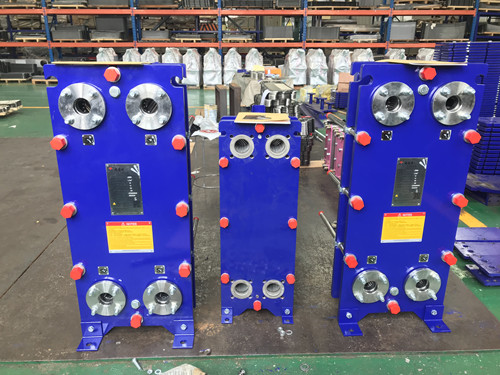
The significance of industrial plate heat exchanger customized is to meet the different application scenarios, today it is very flexible, in Ripert not only has up to hundreds of plate types, there are different process structures, different forms of receiver, really in the scene application to bring customers great satisfaction. In addition, the stable operation performance, basically no failure characteristics also give people a lot of confidence in the choice. In the food and beverage, textile printing and dyeing, pharmaceutical, chemical, marine and other industries, the application effect is remarkable, if you also have this demand, may click the small red box below for details.
Related information
- Installation Guide for Plate Heat Exchangers
- Analysis of the material and application scope of the most complete plate heat exchanger gasket in history
- Plate Heat Exchangers in MVR Evaporation: Designing Around a Small Driving Force
- Plate Heat Exchangers: Semi-Welded Design
- What is the proportion of pressure drop in the selection of plate heat exchanger?
- Detailed structure and component analysis of plate heat exchanger
Relevant article
- Chemical Plate Heat Exchanger: Lubricant Roles & Care
- Heat Station Plate Heat Exchangers: Design & Application
- Heat Station Plate Heat Exchangers: Installation Guide
- Boiler Plate Heat Exchangers: Maintenance Guide
- The Integrated Heat Exchanger Unit: An Efficient Integration and Intelligent Control Solution for Thermal Energy Conversion
- Sulfuric Acid Plate Heat Exchangers: Design & Application
- Coal Chemical Plate Heat Exchangers: Cleaning & Maintenance
- Petrochemical Plate Heat Exchangers: Design & Application
- Chemical Plate Heat Exchangers: Gasket Ageing
- Sulfuric Acid Plate Heat Exchangers: Design & Application
Latest information
- Chemical Plate Heat Exchanger: Lubricant Roles & Care
- Heat Station Plate Heat Exchangers: Design & Application
- Heat Station Plate Heat Exchangers: Installation Guide
- Boiler Plate Heat Exchangers: Maintenance Guide
- The Integrated Heat Exchanger Unit: An Efficient Integration and Intelligent Control Solution for Thermal Energy Conversion
- Sulfuric Acid Plate Heat Exchangers: Design & Application
- Coal Chemical Plate Heat Exchangers: Cleaning & Maintenance
- Petrochemical Plate Heat Exchangers: Design & Application
- Chemical Plate Heat Exchangers: Gasket Ageing
- Sulfuric Acid Plate Heat Exchangers: Design & Application