Refrigeration Plate Heat Exchangers: Key Advantages

Plate heat exchanger can be used not only in heat exchange, but also in some refrigeration equipment and refrigeration industry. Its function can maintain the current temperature and prevent heat loss. What is its characteristics in refrigeration technology?
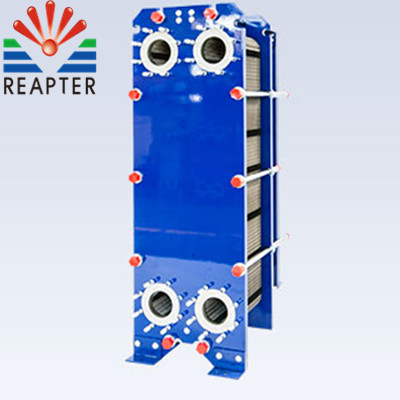
1. The small amount of refrigerant charge is conducive to environmental protection and reduce the operating cost
The volume of shell side and tube side is very large. To make the refrigeration system work normally, a large amount of refrigerant should be filled, and environmental pollution may be caused. On the one hand, the plate heat exchanger is small in volume and the space size is small on the other hand.
2. Less freezing tendency and high frost resistance
Because of the high turbulence and uniform temperature distribution of water in plate heat exchanger at low velocity, the freezing tendency of frozen water is reduced. Even if freezing occurs, it can bear the pressure caused by freezing and can be used after freezing.
3. Evaporation is complete and economic is high
When the refrigerant evaporates in the plate heat exchanger, it is easy to realize the complete evaporation to the liquid free degree. Therefore, in most cases, the refrigeration system does not need to set up a gas-liquid separator. And it is easy to realize unit.
In the refrigeration technology, plate heat exchanger can effectively improve the frost resistance of some refrigeration equipment, and many refrigeration equipment will often contact with low temperature. And can relieve pressure, save some cost. Improve the efficiency of use.
Related information
- Plate Heat Exchangers for Chemical Duty
- Do you know that under the condition of all refrigerants, the focus of imported semi welded plate heat exchanger should be different
- Transcritical CO2 Systems: Selecting Plate Heat Exchangers for High Pressure
- What is the difference between the hanging holes on the plate heat exchanger plate? What's the effect on heat exchange?
- PHE Storage Guidelines for Spare Units
- All plate packs of Reapter plate and shell heat exchanger are automatically welded
Relevant article
- Chemical Plate Heat Exchanger: Lubricant Roles & Care
- Heat Station Plate Heat Exchangers: Design & Application
- Heat Station Plate Heat Exchangers: Installation Guide
- Boiler Plate Heat Exchangers: Maintenance Guide
- The Integrated Heat Exchanger Unit: An Efficient Integration and Intelligent Control Solution for Thermal Energy Conversion
- Sulfuric Acid Plate Heat Exchangers: Design & Application
- Coal Chemical Plate Heat Exchangers: Cleaning & Maintenance
- Petrochemical Plate Heat Exchangers: Design & Application
- Chemical Plate Heat Exchangers: Gasket Ageing
- Sulfuric Acid Plate Heat Exchangers: Design & Application
Latest information
- Chemical Plate Heat Exchanger: Lubricant Roles & Care
- Heat Station Plate Heat Exchangers: Design & Application
- Heat Station Plate Heat Exchangers: Installation Guide
- Boiler Plate Heat Exchangers: Maintenance Guide
- The Integrated Heat Exchanger Unit: An Efficient Integration and Intelligent Control Solution for Thermal Energy Conversion
- Sulfuric Acid Plate Heat Exchangers: Design & Application
- Coal Chemical Plate Heat Exchangers: Cleaning & Maintenance
- Petrochemical Plate Heat Exchangers: Design & Application
- Chemical Plate Heat Exchangers: Gasket Ageing
- Sulfuric Acid Plate Heat Exchangers: Design & Application