Acceptance requirements for pressure testing of heat exchangers

Plate heat exchanger is a heat exchange equipment, manufacturing completed plate heat exchanger to heat exchanger plate joints, pipe and shell to the course of the pressure test or increase the airtightness of the test, pressure test, including hydrostatic test and air pressure test. Plate heat exchanger general hydraulic test, but due to structural or support reasons, can not be filled with liquid or operating conditions do not allow the residual test liquid, air pressure test can be used.
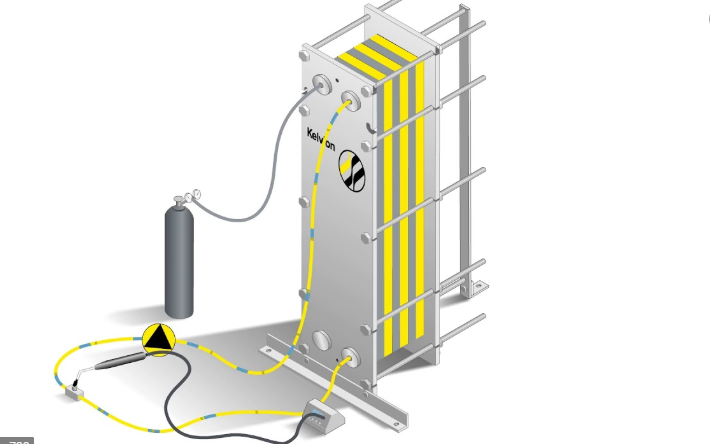
Before use to pressure testing, heat exchanger pressure testing system by the heat exchanger, pressure test pump, metal hoses, pressure gauge, blind plate and pressure test ring and other components. Heat exchanger equipment pressure testing mainly includes: media test, air-tightness test, water pressure test.
Pressure test sequence and requirements
1?Fixed tube plate type
(1) Shell pressure test. Check the shell, heat exchanger tube and tube plate connection joints and related parts.
(2) Pipe test pressure. Check the tube box and related parts.
2?U-tube heat exchanger, kettle reboiler (with u-tube bundle) and stuffing box heat exchanger
(1) Shell pressure test (with test pressure ring). Check the shell, tube plate, heat exchanger tube and tube plate connection parts and related parts.
(2) Pipe test pressure. Check the relevant parts of the pipe box.
3?Floating head type heat exchanger, kettle reboiler, with floating head type tube bundle
(1) Test the pressure of the connecting joints between the tube and the tube plate by using the test pressure ring and the special pressure testing tool for the floating head. For the kettle reboiler, it should also be equipped with a special shell for testing the joint between the tube and the tube plate to check the joint between the heat exchanger tube and the tube plate and related parts.
(2) Pipe test pressure. Check the tube box, floating head cover and related parts.
(3) Shell test pressure: check the shell, heat exchanger tube and pipe plate connection joints and related parts.
(4) When the test pressure of the pipe course is higher than the pressure of the shell course, test pressurization of the joint. According to the drawings, or according to the production and construction unit of the method agreed upon by both parties.
5?Overlapping heat exchanger joint pressure test single. When each heat exchanger is connected, the pipe and shell test pressure in the overlapping process after assembly. Check the sealing of the flange of the receiver.
6?The heat exchanger pressure test after the internal water should be released net. If necessary, should be blown dry.
Acceptance
1?Equipment has been in operation for one week, and the indicators have reached the technical requirements or can meet the production needs.
2?Equipments are anticorrosive and undamaged and meet the standard of perfection.
3?Submit the following technical information
(1) Design changes and material substitution notice, materials, parts certificate.
(2) Overhaul records.
(3) Weld quality inspection (including visual inspection and nondestructive testing, etc.) report.
(4) Experimental process records for the entire heat exchanger.
If the plate heat exchanger can meet the overhaul quality and duration requirements of the heat exchanger after pressure testing, it is ready for use. If the gas to be processed is highly toxic and hazardous, or if the plate heat exchanger tube - between the shell process does not allow the slightest leakage of gas, it is necessary to increase the plate heat exchanger gas tightness test. Riport plate heat exchanger in the factory before the above test pressure must be passed before packaging and shipping. To ensure that the user will not have problems in the use of the process.
Related information
- Application cases of plate and shell heat exchangers in the energy industry
- Coal Chemical Plate Heat Exchangers: Cleaning & Maintenance
- Large professional plate and shell heat exchanger manufacturer-Qingdao Ruipute
- Are you still looking for a good quality plate heat exchanger manufacturer? A one-stop shop allows you to experience something extraordinary
- Industrial Plate Heat Exchangers: Selection Guide
- Causes and treatment methods for excessive pressure drop of heat exchanger
Relevant article
- Chemical Plate Heat Exchanger: Lubricant Roles & Care
- Heat Station Plate Heat Exchangers: Design & Application
- Heat Station Plate Heat Exchangers: Installation Guide
- Boiler Plate Heat Exchangers: Maintenance Guide
- The Integrated Heat Exchanger Unit: An Efficient Integration and Intelligent Control Solution for Thermal Energy Conversion
- Sulfuric Acid Plate Heat Exchangers: Design & Application
- Coal Chemical Plate Heat Exchangers: Cleaning & Maintenance
- Petrochemical Plate Heat Exchangers: Design & Application
- Chemical Plate Heat Exchangers: Gasket Ageing
- Sulfuric Acid Plate Heat Exchangers: Design & Application
Latest information
- Chemical Plate Heat Exchanger: Lubricant Roles & Care
- Heat Station Plate Heat Exchangers: Design & Application
- Heat Station Plate Heat Exchangers: Installation Guide
- Boiler Plate Heat Exchangers: Maintenance Guide
- The Integrated Heat Exchanger Unit: An Efficient Integration and Intelligent Control Solution for Thermal Energy Conversion
- Sulfuric Acid Plate Heat Exchangers: Design & Application
- Coal Chemical Plate Heat Exchangers: Cleaning & Maintenance
- Petrochemical Plate Heat Exchangers: Design & Application
- Chemical Plate Heat Exchangers: Gasket Ageing
- Sulfuric Acid Plate Heat Exchangers: Design & Application