Waste Heat Recovery Plate Heat Exchangers: Key Advantages

In 2019, President Xi continued to promote pollution prevention, strengthen the protection and restoration of the ecological system, strengthen the green environmental protection industry, vigorously promote green development, make overall plans, take both the symptoms and the root causes, make precise efforts, and seek practical results to continue to improve the quality of the ecological environment.
On the road to environmental protection, plate heat exchangers have made a certain contribution to the waste heat recovery of industrial production lines, and will make more contributions.
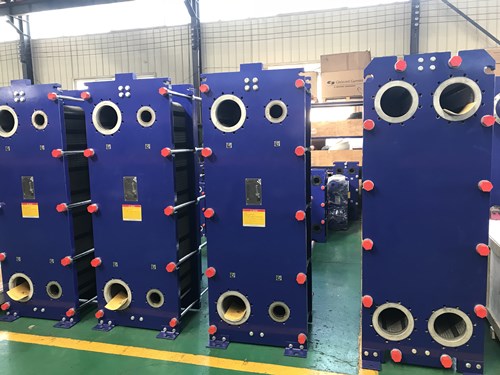
Waste heat recovery is the replacement of equipment or the addition of equipment on the production line that is already in production, to improve heat exchange efficiency or convert waste heat recovery into secondary usable heat energy, and use it in preheating conditions. The waste heat is mainly
It is discharged in the form of water and steam. The heat exchange between water-water and water-steam of the plate heat exchanger has a high degree of matching with waste heat recovery, and it has the advantages of small footprint and high heat exchange efficiency.
Favor of the company's environmental protection projects.
Taking Shandong as an example, Zibo, Jinan and other heavy industry cities will have a large number of "stopping renovation" companies in 2019. The best measure to meet emission standards and start construction smoothly is to increase waste heat recovery equipment, so give them to companies that have new production lines.
The warning is that when building a new production line, you must find a professional engineer for scientific design. The cost of the plate heat exchanger in the early stage will be reduced a lot in the later period. Such industrial companies follow the country’s major policies to save energy and the environment.
Protection is a major measure to benefit the country and the people. How to effectively use heat is a very important topic. Qingdao RPT has been providing plate heat exchangers and production solutions in the process of waste heat recovery for more than ten years, and has 20 years of industry experience.
The engineer team ensures that the production process is continuously improved, and under the guidance of the national policy, it continues to break through the foreign technology monopoly, and do its part for the domestic atmospheric environmental protection.
Related information
- Marine Plate Heat Exchangers: Fault Diagnosis
- How to descale the plate heat exchanger? What problems should be paid attention to during use?
- Pharmaceutical Plate Heat Exchangers: Working Principle
- Waste Heat Recovery with Plate Heat Exchangers: Sizing and Fouling
- Mass production of double wall plate heat exchanger
- Plate heat exchanger manufacturers to reveal your secret - plate heat exchanger rubber gasket processing technology
Relevant article
- Chemical Plate Heat Exchanger: Lubricant Roles & Care
- Heat Station Plate Heat Exchangers: Design & Application
- Heat Station Plate Heat Exchangers: Installation Guide
- Boiler Plate Heat Exchangers: Maintenance Guide
- The Integrated Heat Exchanger Unit: An Efficient Integration and Intelligent Control Solution for Thermal Energy Conversion
- Sulfuric Acid Plate Heat Exchangers: Design & Application
- Coal Chemical Plate Heat Exchangers: Cleaning & Maintenance
- Petrochemical Plate Heat Exchangers: Design & Application
- Chemical Plate Heat Exchangers: Gasket Ageing
- Sulfuric Acid Plate Heat Exchangers: Design & Application
Latest information
- Chemical Plate Heat Exchanger: Lubricant Roles & Care
- Heat Station Plate Heat Exchangers: Design & Application
- Heat Station Plate Heat Exchangers: Installation Guide
- Boiler Plate Heat Exchangers: Maintenance Guide
- The Integrated Heat Exchanger Unit: An Efficient Integration and Intelligent Control Solution for Thermal Energy Conversion
- Sulfuric Acid Plate Heat Exchangers: Design & Application
- Coal Chemical Plate Heat Exchangers: Cleaning & Maintenance
- Petrochemical Plate Heat Exchangers: Design & Application
- Chemical Plate Heat Exchangers: Gasket Ageing
- Sulfuric Acid Plate Heat Exchangers: Design & Application