Material Selection for Plate Heat Exchangers

First, Shanghai opened the vigorous prelude to garbage sorting, and Qingdao followed suit.
Although the classification of garbage may seem quite different, there are rules to follow.
For example, wet garbage and kitchen garbage are mostly overlapped, and this part of garbage also constitutes the bulk of recyclable resources.
Presumably in the future, emerging environmental protection companies will be able to shine. What role does the plate heat exchanger play?
Wet garbage can be fermented into power system and used as fuel through anaerobic treatment, and the function of heat exchanger is to convert existing heat energy into steam to generate electricity.
Whether it can be done is a problem, and whether it can be done is a bigger problem.
The plate heat exchanger is used in the place marked in the red frame.
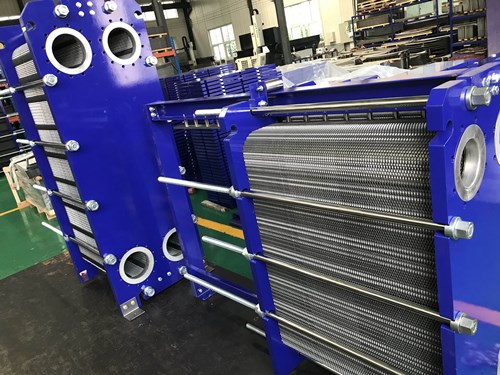
The plate heat exchanger produced by RPT can use various special materials, such as titanium plate. Even for severe working conditions, its excellent production technology can ensure complete pressing and uniform thinning. This plate has strong corrosion resistance.
.
Ripter has always kept up with the pace of the times with an aggressive attitude.
Although the classification of garbage may seem quite different, there are rules to follow.
For example, wet garbage and kitchen garbage are mostly overlapped, and this part of garbage also constitutes the bulk of recyclable resources.
Presumably in the future, emerging environmental protection companies will be able to shine. What role does the plate heat exchanger play?
Wet garbage can be fermented into power system and used as fuel through anaerobic treatment, and the function of heat exchanger is to convert existing heat energy into steam to generate electricity.
The difficulty in this process is that the steam-rich flue gas contains a large amount of chloride ions, which is highly corrosive; there are many impurities, which may cause the risk of blockage.
Whether it can be done is a problem, and whether it can be done is a bigger problem.
The plate heat exchanger is used in the place marked in the red frame.
The plate heat exchanger produced by RPT can use various special materials, such as titanium plate. Even for severe working conditions, its excellent production technology can ensure complete pressing and uniform thinning. This plate has strong corrosion resistance.
.
Ripter has always kept up with the pace of the times with an aggressive attitude.
【Paper label】:titanium plate heat exchangers
Related information
- Design Considerations for Plate Heat Exchangers
- What are the advantages of plate heat exchangers compared to conventional heat exchangers?
- A special plate heat exchanger for heat transfer in the health field meets your extreme imagination in this factory
- Installation Guide for Plate Heat Exchangers
- PHE Storage Guidelines for Spare Units
- Analysis of problems with heat transfer efficiency and pressure drop in plate and shell heat exchangers
Relevant article
- Chemical Plate Heat Exchanger: Lubricant Roles & Care
- Heat Station Plate Heat Exchangers: Design & Application
- Heat Station Plate Heat Exchangers: Installation Guide
- Boiler Plate Heat Exchangers: Maintenance Guide
- The Integrated Heat Exchanger Unit: An Efficient Integration and Intelligent Control Solution for Thermal Energy Conversion
- Sulfuric Acid Plate Heat Exchangers: Design & Application
- Coal Chemical Plate Heat Exchangers: Cleaning & Maintenance
- Petrochemical Plate Heat Exchangers: Design & Application
- Chemical Plate Heat Exchangers: Gasket Ageing
- Sulfuric Acid Plate Heat Exchangers: Design & Application
Latest information
- Chemical Plate Heat Exchanger: Lubricant Roles & Care
- Heat Station Plate Heat Exchangers: Design & Application
- Heat Station Plate Heat Exchangers: Installation Guide
- Boiler Plate Heat Exchangers: Maintenance Guide
- The Integrated Heat Exchanger Unit: An Efficient Integration and Intelligent Control Solution for Thermal Energy Conversion
- Sulfuric Acid Plate Heat Exchangers: Design & Application
- Coal Chemical Plate Heat Exchangers: Cleaning & Maintenance
- Petrochemical Plate Heat Exchangers: Design & Application
- Chemical Plate Heat Exchangers: Gasket Ageing
- Sulfuric Acid Plate Heat Exchangers: Design & Application