Sugar Plate Heat Exchangers: Material Selection

Sugar, something that almost everyone cannot live without, is commonplace. Sugar, is the use of sugar cane, beet and other raw materials to make finished sugar, or raw sugar or granulated sugar as raw materials for the refining and processing of various refined sugar behavior. In the process of processing, can not do without sugar production stainless steel plate heat exchanger, and today we will talk about, what are the specific applications.
Sugar process and procedures are very many, mainly divided into raw material transportation, raw material pressing, clarification of raw material juice, evaporation, boiling sugar, crystallization, honey, drying, packaging, etc., and in the evaporation, cooling, crystallization process is mainly used in the sugar with stainless steel plate heat exchanger. For example, the evaporation, heating, crystallization of raw material juice can be used.
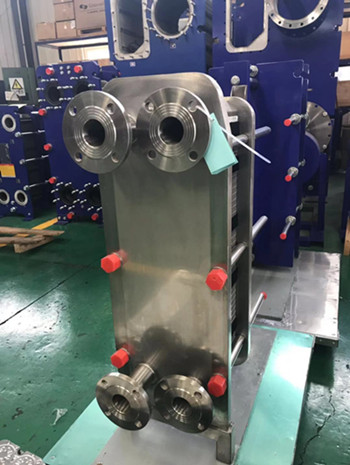
This food-grade stainless steel is the sugar industry production process of the necessities, first of all, it is compact, flexible and convenient installation, which is in the use of small space workshop is particularly applicable, followed by high heat transfer efficiency, which has a very good role in energy saving and environmental protection. Then it is, the process can be increased or decreased at will, in the process of sugar production, if the heat transfer effect is found to be bad, can be increased or decreased by the plate to change the area, the use of quite flexible.
Finally, clean and hygienic, easy to clean. For sugar production, clean and hygienic stainless steel equipment is fundamental. After more than a decade of development, Qingdao Riport is able to produce a variety of food-grade sealant strips, together with stainless steel plates and sheets. As a result, stainless steel plate heat exchanger for sugar production is widely sold. It is for this good quality that people see us. And, of course, for the clean and efficient operation of the entire sugar production process. So there is nothing wrong with choosing us.
Related information
- Data Centre Waste Heat to District Heating: Matching Low-Grade Heat to a Network
- Gasketed, Semi-Welded or Fully Welded: Choosing Plate Heat Exchanger Construction for the Duty
- Acceptance requirements for pressure testing of heat exchangers
- The selection of plate heat exchanger plates is very important, and the service life depends on it
- Plate Heat Exchangers for Industrial Duty
- How exactly does a plate heat exchanger last up to 10 years?
Relevant article
- Chemical Plate Heat Exchanger: Lubricant Roles & Care
- Heat Station Plate Heat Exchangers: Design & Application
- Heat Station Plate Heat Exchangers: Installation Guide
- Boiler Plate Heat Exchangers: Maintenance Guide
- The Integrated Heat Exchanger Unit: An Efficient Integration and Intelligent Control Solution for Thermal Energy Conversion
- Sulfuric Acid Plate Heat Exchangers: Design & Application
- Coal Chemical Plate Heat Exchangers: Cleaning & Maintenance
- Petrochemical Plate Heat Exchangers: Design & Application
- Chemical Plate Heat Exchangers: Gasket Ageing
- Sulfuric Acid Plate Heat Exchangers: Design & Application
Latest information
- Chemical Plate Heat Exchanger: Lubricant Roles & Care
- Heat Station Plate Heat Exchangers: Design & Application
- Heat Station Plate Heat Exchangers: Installation Guide
- Boiler Plate Heat Exchangers: Maintenance Guide
- The Integrated Heat Exchanger Unit: An Efficient Integration and Intelligent Control Solution for Thermal Energy Conversion
- Sulfuric Acid Plate Heat Exchangers: Design & Application
- Coal Chemical Plate Heat Exchangers: Cleaning & Maintenance
- Petrochemical Plate Heat Exchangers: Design & Application
- Chemical Plate Heat Exchangers: Gasket Ageing
- Sulfuric Acid Plate Heat Exchangers: Design & Application