Maintenance Guide for Plate Heat Exchangers

Sometimes, when small cracks appear on the plate, or in a few cases, when the gasket is displaced or damaged and lead toplate heat exchanger leakage. This is particularly harmful in the food, beverage and chemical industries and can lead to massive downtime. Fortunately, it is modular. Once a defective plate or gasket is found, just remove it from the adjacent plate, and Phe can be put into use again. Its capacity will drop slightly until you get a replacement. So, how to find the defective plate?
We outline four simple steps below. Step 1: drain, isolate and dry. The first step is to empty the Phe and isolate it from the system. The actual test depends on the water, so you have to wait for all the plates to dry. Now you can decompose it to speed up the process, but you have to reassemble it for the next step, and then decompose it again in subsequent steps. Step 2: water test. Second, only one side of the PHE is allowed to flow through. Each plate will then have a wet side and a dry side, but both sides of the leaky plate and the adjacent plate will be wet, so it is easy to identify by touch. Step 3: remove. Third, remove the plate heat exchanger according to th manufacturer's guidelines. In this way, we can stop plate heat exchanger leakage.
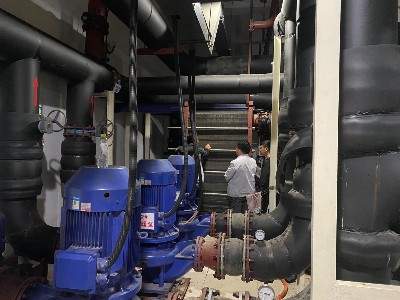
In this step, it's best to leave the boards in the frame so that you can more easily examine them one by one. Step 4: check. Finally, look at each plate separately, noting that both sides are wet. After removing all wet plates on both sides, the PHE can be reassembled and put back into service with reduced capacity until appropriate replacement parts are available.
Even if the plate heat exchanger leakage, don't panic. The above measures can give you a guide, but it should be pointed out that if you don't know it well, try not to dismantle it yourself, so as to minimize the risk.
Related information
- PHE Gasket Replacement: Step-by-Step Guide
- Marine Plate Heat Exchangers: Fault Diagnosis
- Plate Heat Exchangers: Model Guide
- Convenient panel shell heat exchanger for high temperature oil heat exchange, great use in fully automatic production process
- Natural gas cooling liquefied plate and shell heat exchanger
- NT50M Compatible PHE Plates & Gaskets in Stock
Relevant article
- Chemical Plate Heat Exchanger: Lubricant Roles & Care
- Heat Station Plate Heat Exchangers: Design & Application
- Heat Station Plate Heat Exchangers: Installation Guide
- Boiler Plate Heat Exchangers: Maintenance Guide
- The Integrated Heat Exchanger Unit: An Efficient Integration and Intelligent Control Solution for Thermal Energy Conversion
- Sulfuric Acid Plate Heat Exchangers: Design & Application
- Coal Chemical Plate Heat Exchangers: Cleaning & Maintenance
- Petrochemical Plate Heat Exchangers: Design & Application
- Chemical Plate Heat Exchangers: Gasket Ageing
- Sulfuric Acid Plate Heat Exchangers: Design & Application
Latest information
- Chemical Plate Heat Exchanger: Lubricant Roles & Care
- Heat Station Plate Heat Exchangers: Design & Application
- Heat Station Plate Heat Exchangers: Installation Guide
- Boiler Plate Heat Exchangers: Maintenance Guide
- The Integrated Heat Exchanger Unit: An Efficient Integration and Intelligent Control Solution for Thermal Energy Conversion
- Sulfuric Acid Plate Heat Exchangers: Design & Application
- Coal Chemical Plate Heat Exchangers: Cleaning & Maintenance
- Petrochemical Plate Heat Exchangers: Design & Application
- Chemical Plate Heat Exchangers: Gasket Ageing
- Sulfuric Acid Plate Heat Exchangers: Design & Application