Home › News › The pressure difference on both sides of the plate heat exchanger for seawater desalination is caused by these reasons
The pressure difference on both sides of the plate heat exchanger for seawater desalination is caused by these reasons

Plate heat exchangers have the advantages of small footprint and are widely used in various industries. At present, plate heat exchangers have also been widely used in the seawater desalination process and cooling water system of power plants, and have achieved excellent results.
Why do these factors appear when the equipment is in operation?
1. The equipment is blocked.
When the sediment content in the seawater is high, the pipeline is not completely purged after installation, or foreign matter enters the pipeline, the equipment flow channel is blocked, which reduces the cross-sectional area of the flow channel and increases the pressure drop value of the equipment.
2. There is a problem with the measuring instrument.
When there is a problem with the measuring instrument, the measured value will be deviated, resulting in a measurement error in the pressure difference
3. Affected by differences in physical parameters.
The temperature of the medium will affect the viscosity of the medium.
When the temperature of the medium decreases, its viscosity will increase, and the pressure drop will increase at the same flow rate.
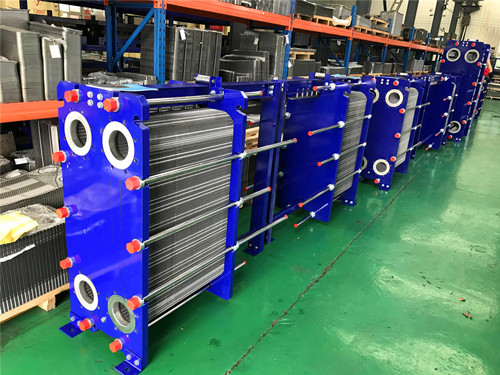
4. The cross-sectional area of the runner changes.
The cross-sectional area of the flow channel of the plate is related to the corrugation depth, corrugation pitch and plate width.
The larger the cross-sectional area of the flow channel, the smaller the fluid velocity, the smaller the fluid resistance, and the smaller the pressure difference.
5. The size deviation of the plate corner hole.
When there is a deviation in the size of the corner hole of the plate, the flow resistance will change, and the pressure drop of the corner hole will deviate from the design value.
Therefore, whether it is a design problem or a use problem, all aspects of improperity will lead to pressure difference problems. In order to avoid such problems, not only should the installation and use, reasonable arrangement, but also ensure the accuracy during manufacturing to avoid these problems.
problem.
Qingdao RPT has rich design and manufacturing experience, reliable quality and high quality, and welcomes your consultation.
【Paper label】:seawater plate heat exchanger
Related information
- What are the advantages of Ruipute's production of plate heat exchanger gaskets
- Feicheng sea crystal salinization using Ripple plate heat exchanger case
- Grain & Oil Plate Heat Exchangers: Design & Application
- Design Considerations for Plate Heat Exchangers
- Don't you know what are the benefits of using semi-welded plate heat exchanger plates?
- Heat Station Plate Heat Exchangers: Design & Application
Relevant article
- Chemical Plate Heat Exchanger: Lubricant Roles & Care
- Heat Station Plate Heat Exchangers: Design & Application
- Heat Station Plate Heat Exchangers: Installation Guide
- Boiler Plate Heat Exchangers: Maintenance Guide
- The Integrated Heat Exchanger Unit: An Efficient Integration and Intelligent Control Solution for Thermal Energy Conversion
- Sulfuric Acid Plate Heat Exchangers: Design & Application
- Coal Chemical Plate Heat Exchangers: Cleaning & Maintenance
- Petrochemical Plate Heat Exchangers: Design & Application
- Chemical Plate Heat Exchangers: Gasket Ageing
- Sulfuric Acid Plate Heat Exchangers: Design & Application
Latest information
- Chemical Plate Heat Exchanger: Lubricant Roles & Care
- Heat Station Plate Heat Exchangers: Design & Application
- Heat Station Plate Heat Exchangers: Installation Guide
- Boiler Plate Heat Exchangers: Maintenance Guide
- The Integrated Heat Exchanger Unit: An Efficient Integration and Intelligent Control Solution for Thermal Energy Conversion
- Sulfuric Acid Plate Heat Exchangers: Design & Application
- Coal Chemical Plate Heat Exchangers: Cleaning & Maintenance
- Petrochemical Plate Heat Exchangers: Design & Application
- Chemical Plate Heat Exchangers: Gasket Ageing
- Sulfuric Acid Plate Heat Exchangers: Design & Application