Gasketed vs Brazed Plate Heat Exchangers: Differences, Advantages and Applications

Gasketed vs. Brazed Plate Heat Exchangers: Differences, Advantages and Applications
Plate heat exchangers are widely used in HVAC, refrigeration, industrial processing, district heating, and energy recovery systems. Their compact structure and high heat transfer efficiency make them an effective solution for transferring thermal energy between two fluids.
Among the most common designs are gasketed plate heat exchangers and brazed plate heat exchangers. Although both use corrugated metal plates to transfer heat, they differ in construction, maintenance requirements, operating limitations, and application suitability.
Understanding these differences helps engineers and equipment buyers select the right heat exchanger for their specific operating conditions.
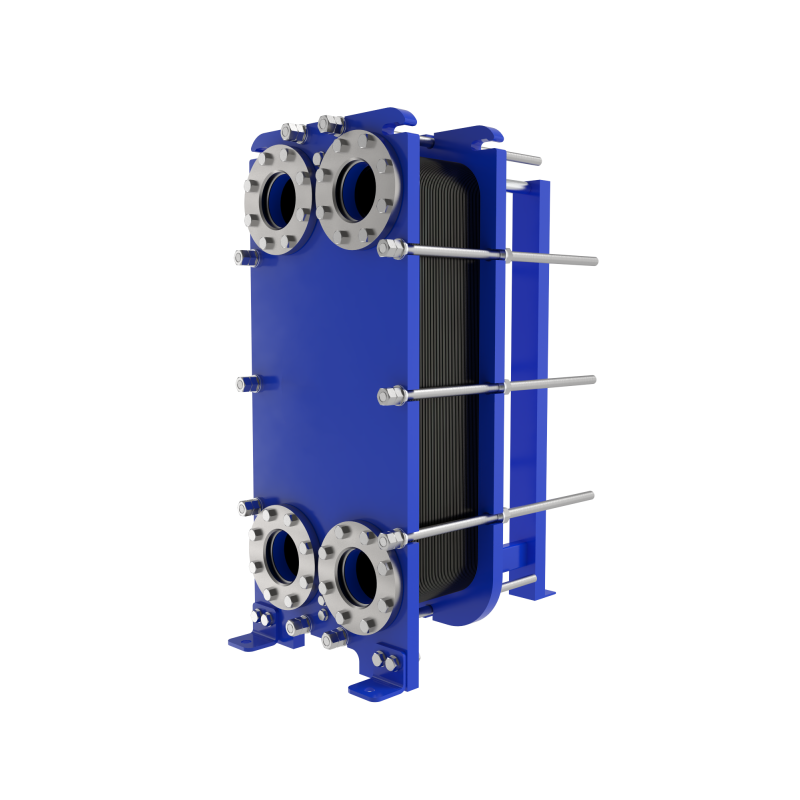
1. What Is a Gasketed Plate Heat Exchanger?
A gasketed plate heat exchanger consists of a series of thin, corrugated metal plates assembled within a supporting frame. Gaskets are installed around the plates to seal the flow channels and direct the hot and cold fluids through alternating passages.
The corner ports of the plates form distribution channels for the fluids. Depending on the gasket arrangement, each fluid enters its designated channels and flows across one side of the heat transfer plates.
Heat passes through the metal plates from the hotter fluid to the colder fluid without the two fluids mixing under normal operating conditions.
Key Advantages
High heat transfer efficiency
The corrugated plate surfaces promote turbulence and provide a large heat transfer area within a compact structure. This can produce high heat transfer coefficients compared with many conventional shell-and-tube designs, depending on the fluids and operating conditions.
Flexible capacity adjustment
The heat transfer area can often be adjusted by adding or removing plates, provided the frame and design permit the modification.
Easy maintenance
The plate pack can be opened for inspection, cleaning, and gasket replacement. This makes gasketed designs particularly suitable for applications where regular maintenance is necessary.
Wide range of applications
Gasketed plate heat exchangers are used in HVAC systems, district heating, food and beverage processing, chemical production, and industrial heating and cooling.
2. Heat Transfer Performance and Pressure Drop
One of the main reasons plate heat exchangers are widely used is their ability to achieve effective heat transfer within a relatively small footprint.
Three design characteristics contribute to their performance.
High Fluid Turbulence
The corrugated plate pattern changes the direction of fluid flow and promotes turbulence. This helps improve heat transfer between the fluid and the plate surface.
However, higher turbulence also generally increases hydraulic resistance. The final design must balance heat transfer performance against the allowable pressure drop.
Large Effective Heat Transfer Area
The corrugated surfaces provide an extensive heat transfer area relative to the equipment volume. This allows a plate heat exchanger to deliver substantial thermal capacity without requiring the long tubes or large shell found in some conventional designs.
Counter-Current Flow
Many plate heat exchangers use counter-current flow, in which the hot and cold fluids travel in opposite directions.
This arrangement can maintain a favorable temperature difference along the heat transfer surface and, under suitable conditions, allow one fluid's outlet temperature to approach the other fluid's inlet temperature.
The actual achievable temperatures depend on the heat exchanger design, flow rates, fluid properties, and operating limits.
3. What Is a Brazed Plate Heat Exchanger?
A brazed plate heat exchanger also uses corrugated metal plates, but the plates are permanently joined by a brazing process rather than sealed with removable gaskets and held together in a conventional plate frame.
Because the plate pack is permanently bonded, the internal channels cannot normally be opened for mechanical cleaning or individual plate replacement.
Key Advantages
Compact construction
Brazed plate heat exchangers have a compact, lightweight structure and can be installed in systems with limited space.
No plate-pack gaskets
The absence of conventional plate-pack gaskets eliminates gasket replacement as a routine maintenance task and avoids leakage mechanisms associated specifically with those gaskets.
Suitable for smaller systems
Their compact design and relatively straightforward installation make brazed plate heat exchangers common in residential heating, domestic hot water systems, heat pumps, and refrigeration equipment.
Efficient heat transfer
Like gasketed designs, brazed plate heat exchangers use corrugated surfaces to promote turbulence and provide a large heat transfer area relative to their size.
4. Gasketed vs. Brazed Plate Heat Exchangers
| Feature | Gasketed plate heat exchanger | Brazed plate heat exchanger |
|---|---|---|
| Construction | Plates sealed with gaskets in a frame | Plates permanently brazed together |
| Maintenance | Can be opened for inspection and cleaning | Internal plate pack is generally not openable |
| Gasket replacement | Possible | No conventional plate-pack gaskets |
| Heat transfer area adjustment | Often possible by changing the plate count | Generally fixed |
| Installation footprint | Compact, but includes a frame and tightening system | Usually very compact |
| Typical applications | Industrial processes, HVAC, district heating, food and beverage | Heat pumps, refrigeration, residential heating, smaller systems |
| Fouling management | Easier access for mechanical cleaning | Cleaning options depend on the deposit and manufacturer guidance |
The best choice depends on more than initial equipment cost. Fluid cleanliness, service accessibility, operating pressure, temperature, thermal duty, and expected maintenance requirements should all be considered.
5. Leakage Risks and Fluid Separation
In a gasketed plate heat exchanger, the gaskets seal the plate channels and help keep the hot and cold fluids separated. Gasket aging, incorrect installation, excessive tightening or insufficient tightening, and unsuitable operating conditions can lead to leakage.
For applications where fluid separation is particularly important, a double-wall plate heat exchanger may be considered. Its plate construction is designed to provide an additional barrier and a path for leakage detection, depending on the specific design.
A brazed plate heat exchanger has no conventional plate-pack gaskets, but it is not immune to leakage or internal failure. Damage caused by corrosion, freezing, excessive pressure, thermal stress, or operation outside the rated limits can compromise the brazed plate pack.
The equipment should therefore be selected according to the required pressure, temperature, fluid compatibility, and safety considerations.
6. How to Choose the Right Plate Heat Exchanger
Before selecting a gasketed or brazed plate heat exchanger, evaluate the following factors.
-
Thermal duty: Required heating or cooling capacity and target outlet temperatures.
-
Operating pressure and temperature: Confirm that the selected model meets the actual operating and design conditions.
-
Fluid properties: Consider viscosity, corrosiveness, suspended solids, and fouling tendency.
-
Pressure drop: Ensure that the pressure loss is compatible with the pumping system and process requirements.
-
Cleaning requirements: Choose an openable design when frequent inspection or mechanical cleaning is important.
-
Installation space: Consider equipment dimensions, piping connections, and maintenance access.
-
Life-cycle cost: Evaluate purchase price, energy consumption, cleaning, replacement parts, and service life.
For demanding industrial applications, a gasketed plate heat exchanger often offers advantages in serviceability and configuration flexibility. For compact systems with relatively clean fluids and suitable operating conditions, a brazed plate heat exchanger may be the more practical choice.
Related information
- Coal chemical plate heat exchanger in the selection process of these places to pay attention to
- Replacement of plate heat exchangers in heating stations of clean energy districts, technical engineers make on-site surveys to find out the reasons
- After the plate heat exchanger is assembled, please read these before the normal operation of the production line!
- Many people were killed in the Aegean earthquake. How can seawater plate heat exchangers be accident-free?
- A special plate heat exchanger for heat transfer in the health field meets your extreme imagination in this factory
- What are the causes of scaling in plate heat exchangers?
Relevant article
- Gasketed vs Brazed Plate Heat Exchangers: Differences, Advantages and Applications
- Plate Heat Exchanger for Concentrated Juice Processing
- Factors Affecting the Heat Transfer Coefficient of Plate Heat Exchangers
- What Factors Affect the Heat Transfer Coefficient of a Plate Heat Exchanger?
- Factors affecting the pressure drop of plate heat exchangers
- Can plate heat exchanger be directly used for feed water heating or cooling?
- Why the heat transfer efficiency of plate heat exchangers in the heating industry is low
- How to determine the size and angle of plate heat exchanger plate?
- What is the proportion of pressure drop in the selection of plate heat exchanger?
- Why do we recommend food grade plate heat exchanger for beer brewing and fermentation? What should we pay attention to?
Latest information
- The original lubricant in the chemical plate heat exchanger plays so many roles!
- Heat exchanger station supporting plate heat exchanger or have to pay attention to these points, or easily go wrong
- Heat station supporting plate heat exchanger installation is a technical work, these points should be noted
- Improve the efficiency of industrial boilers with plate heat exchanger, these maintenance points to keep in mind
- The Integrated Heat Exchanger Unit: An Efficient Integration and Intelligent Control Solution for Thermal Energy Conversion
- Sulfuric acid and other corrosive media for industrial plate heat exchanger requirements are what
- Simple and effective chemical cleaning method of coal chemical plate heat exchanger, can effectively improve efficiency
- A high-quality petrochemical plate heat exchanger in the production of what to consider
- These causes of chemical plate heat exchanger gasket aging you may not know
- Chemical plant plate heat exchanger, sulfuric acid cooling needs attention