Heating Plate Heat Exchangers: Heat Transfer Efficiency

The technical components of heat exchange equipment are the main thermal application equipment installed and used in my country's modern heating technology system, and the actual level of heat exchange efficiency has a direct and profound impact on the overall development of my country's heating industry. Efficiency seriously affects the heating effect, so what are the reasons for the low heat transfer efficiency of plate heat exchangers in the heating industry? Let's briefly introduce them today.
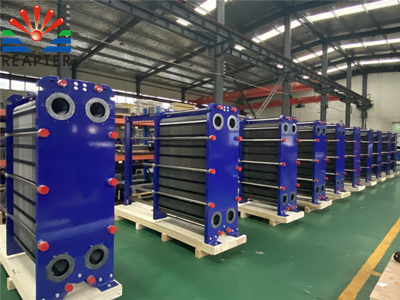
One: Dirt and scale, the main network connected to the heating system on the high-temperature side is basically below 1% due to the low water loss of the system, and according to the characteristics of the supply industry, the equipment is in a non-working state during the non-heating period every year, and it is basically used during the shutdown period. Full water belt pressure protection, therefore, a large amount of medium is rarely replaced, resulting in an increase in the reproduction of microorganisms. Its adhesion is strong, and it is easy to be in the low flow position of the heat exchanger, thereby forming fouling, which further affects the heat transfer efficiency of the heat exchange equipment. Two: The plate heat exchanger leaks, and the heat exchanger is tightly sealed by the sealing tape. For the heat exchange equipment used in the heating industry, the rubber strips are often aging after a few years, resulting in equipment failure, and finally even The plates are permanently deformed and the heat exchanger is difficult to fasten. Therefore, the leakage of a single plate heat exchanger will also lead to problems such as low heat transfer efficiency of plate heat exchanger in the heating industry as a whole. Three: Hydraulic balance, the low temperature side is connected to the indoor system of the secondary network user. In the heating commissioning process, it is necessary to focus on debugging the hydraulic balance to ensure the heating effect. If there is a problem with the hydraulic balance adjustment, it will directly cause heating problems.
The above are several reasons for the low heat transfer efficiency of plate heat exchangers in the heating industry. Therefore, the heat exchange equipment used in the heating industry needs to be professional in terms of design, installation, use and maintenance to achieve the desired effect. For technical support, Qingdao RPT specializes in the R&D and design of plate heat exchangers, and has rich experience in the heating industry. Your consultation is welcome.
Related information
- The temperature difference design of the heat exchanger
- Plate Heat Exchanger Flow Arrangement | Reapter
- No matter how many years change, we always adhere to the original intention of plate heat exchangers manufacturing
- Solving PHE Thermal Design Challenges
- Beverage Plate Heat Exchangers: Applications
- Factors affecting the pressure drop of plate heat exchangers
Relevant article
- Plate Heat Exchangers in Thermal Oil Systems: Seals, Film Temperature and When to Weld
- Water Hammer and Pressure Surges in Plate Heat Exchangers: Causes and Countermeasures
- Plate Heat Exchanger vs Shell-and-Tube Cleaning: Where the Lifetime Cost Diverges
- Plate Heat Exchanger Connections: DN vs NPS, PN vs Class, and What Goes Wrong on Site
- Free Cooling with Plate Heat Exchangers: Design and Changeover
- Multi-Section Plate Heat Exchangers: Two Duties, One Frame
- Retrofitting a Shell-and-Tube with a Plate Heat Exchanger: Fitting the Duty into an Existing Plant
- Packing a Plate Heat Exchanger for Ocean Freight: Preservation, Storage and Site Handover
- Plate Heat Exchangers Under Vacuum: Operating on the Negative-Pressure Side
- Gasket Compression Set and Bolt Torque Management in Plate Heat Exchangers
Latest information
- Chemical Plate Heat Exchanger: Lubricant Roles & Care
- Heat Station Plate Heat Exchangers: Design & Application
- Heat Station Plate Heat Exchangers: Installation Guide
- Boiler Plate Heat Exchangers: Maintenance Guide
- The Integrated Heat Exchanger Unit: An Efficient Integration and Intelligent Control Solution for Thermal Energy Conversion
- Sulfuric Acid Plate Heat Exchangers: Design & Application
- Coal Chemical Plate Heat Exchangers: Cleaning & Maintenance
- Petrochemical Plate Heat Exchangers: Design & Application
- Chemical Plate Heat Exchangers: Gasket Ageing
- Sulfuric Acid Plate Heat Exchangers: Design & Application