The application of plate and shell heat exchanger in power plant flue gas recovery

Under the environmental initiative of energy saving and emission reduction, waste heat recovery and utilization has become the most popular trend. For power plants that consume a large amount of energy, if waste heat can be effectively recovered and used rationally, it will greatly promote production and achieve resource conservation. Recycling. Among the many waste heat losses in power plants, flue gas losses account for the largest proportion, so the development of plate and shell heat exchanger in power plant flue gas recovery The use of heat exchanger in flue gas heat recovery is of great significance.
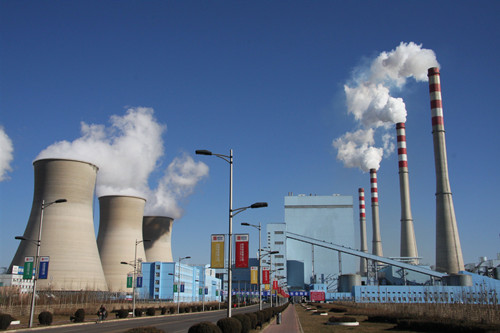
Domestic use of heat exchangers for waste heat recovery from the 1990s has begun, but with the innovation of heat transfer technology and the use of new materials, plate and shell heat exchanger in the flue gas waste heat recovery role is obvious, high utilization rate of flue gas recovery, low energy consumption, to achieve effective and rational use of resources, energy saving and emission reduction.
Plate and shell heat exchanger in the use of flue gas recovery is faced with two problems, one is the corrosion problem, because the flue gas contains sulfur dioxide. oxidation to form sulphur trioxide, which eventually combines with water vapour to form sulphuric acid vapour, which can cause corrosion of the heat exchanger. However, there are very special materials that can be used, so this corrosion can be mitigated.
The second problem is the potential for ash accumulation. This is particularly prominent in coal-based power plants, which can produce scaling that affects the efficiency of heat transfer, and problems that affect the service life and production. However, regular cleaning and maintenance can make this situation improve.
The extensive use of plate and shell heat exchanger in power plant flue gas recovery also indicates that people are paying more and more attention to waste heat recovery and resource recycling, which, of course, is in line with the country's advocacy for environmental protection, energy conservation and emission reduction, Qingdao Riport vigorously develop plate and shell heat exchanger, hoping to contribute more to the road of sustainable development.
Related information
- Many people were killed in the Aegean earthquake. How can seawater plate heat exchangers be accident-free?
- Brewery PHE: Lowering Total Cost of Ownership
- Today let's take a look at some of the unspeakable secrets of the imported plate heat exchanger industry
- Plate Heat Exchangers for Chemical Duty
- Industrial Plate Heat Exchangers: Key Advantages
- To balance the heat loss of the pool, what will the swimming pool plate heat exchanger needs to do?
Relevant article
- Plate Heat Exchangers in Thermal Oil Systems: Seals, Film Temperature and When to Weld
- Water Hammer and Pressure Surges in Plate Heat Exchangers: Causes and Countermeasures
- Plate Heat Exchanger vs Shell-and-Tube Cleaning: Where the Lifetime Cost Diverges
- Plate Heat Exchanger Connections: DN vs NPS, PN vs Class, and What Goes Wrong on Site
- Free Cooling with Plate Heat Exchangers: Design and Changeover
- Multi-Section Plate Heat Exchangers: Two Duties, One Frame
- Retrofitting a Shell-and-Tube with a Plate Heat Exchanger: Fitting the Duty into an Existing Plant
- Packing a Plate Heat Exchanger for Ocean Freight: Preservation, Storage and Site Handover
- Plate Heat Exchangers Under Vacuum: Operating on the Negative-Pressure Side
- Gasket Compression Set and Bolt Torque Management in Plate Heat Exchangers
Latest information
- Chemical Plate Heat Exchanger: Lubricant Roles & Care
- Heat Station Plate Heat Exchangers: Design & Application
- Heat Station Plate Heat Exchangers: Installation Guide
- Boiler Plate Heat Exchangers: Maintenance Guide
- The Integrated Heat Exchanger Unit: An Efficient Integration and Intelligent Control Solution for Thermal Energy Conversion
- Sulfuric Acid Plate Heat Exchangers: Design & Application
- Coal Chemical Plate Heat Exchangers: Cleaning & Maintenance
- Petrochemical Plate Heat Exchangers: Design & Application
- Chemical Plate Heat Exchangers: Gasket Ageing
- Sulfuric Acid Plate Heat Exchangers: Design & Application