Heating Plate Heat Exchangers: Cleaning & Maintenance

Have you found such a phenomenon, a fast heating in November, each began to look around for cleaning floor heating master, in everyone's impression, after cleaning heating home will be very warm, what is this principle?Actually this and heating heat exchanger used in heat exchanger station has a lot to do, because each floor heating temperature is stood out from the heating heat temperature spread outward, the temperature of the heating heat exchanger station generally need to reach 60-70 degrees, if the source temperature to reach, I do not need to dredge the heating pipe every year, really not necessary.Surface gloss, adhesion and scaling, conduction velocity
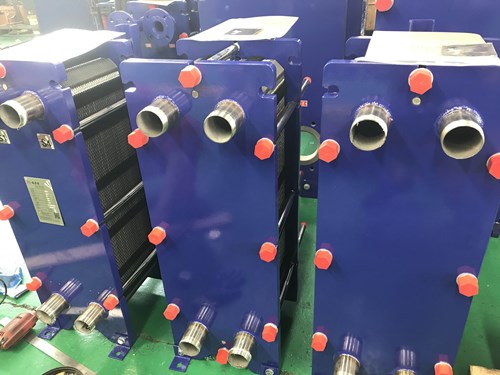
In central heating system, heating heat exchanger station mostly choose to use a plate heat exchanger, circulating water is mainly because network for water and deep well water, hardness is larger, and the computer in the water the water temperature will produce sediment, sediment easily formed in the hot side of the scale or the circulation water suspension, which is deposited on surface of heat exchanger, the formation of secondary scale, and cause clogging fouling in heat exchanger, reasonable selection, increase the resistance of the fluid flow equipment, recovery efficiency is bigger and bigger, and consume more pump power, the cost of unnecessary waste,The plate-type heat exchanger occupies a small area. According to the actual operation of the heating and heat exchange station, the material is made of stainless steel plates with wide flow channel and deep slot, so as to extend the length of the flow channel and improve the heat exchange efficiency.
Is simple, of course, behind the actual case data support, rui put for the west coast of Qingdao above central heating project solution, actively responded to an appeal by the state environmental protection energy conservation, waste heat recovery design into the solution, 20 normal operation of heat exchanger for ten consecutive years, a new production line just on the choice of the good heat exchanger manufacturers, need a year a cleaning?No, it saves a lot of running costs.
Related information
- Plate Heat Exchangers: Plate & Gasket Design
- Application of Plate and Shell Heat Exchanger in Steam Generator Industry
- Principle of heat exchange in heat exchanger
- Key Advantages for Plate Heat Exchangers
- Plate Heat Exchanger Gasket Selection
- Where is the wide gap better than the tube type heat exchanger?
Relevant article
- Wort Cooling with Plate Heat Exchangers: Two-Stage Design, Heat Recovery and Hygiene
- Insulating a Plate Heat Exchanger: Heat Loss, Condensation and Removable Covers
- PED vs ASME for Exported Plate Heat Exchangers: A Practical Compliance Guide
- Plate Heat Exchangers in Desalination: Feed Preheating, Brine Cooling and Material Limits
- HTST Pasteurization with Plate Heat Exchangers: Regeneration, Holding Time and Pressure Differential
- Steam Stall in Plate Heat Exchangers: Why a Steam Heater Loses Control at Part Load
- Gasketed, Semi-Welded or Fully Welded: Choosing Plate Heat Exchanger Construction for the Duty
- Gasket Shelf Life and Storage: Keeping Spare Plate Heat Exchanger Gaskets Fit for Duty
- Plate Heat Exchangers in MVR Evaporation: Designing Around a Small Driving Force
- Plate Heat Exchangers in Sugar Mills: Juice Heating, Evaporation Support and Molasses Cooling
Latest information
- Chemical Plate Heat Exchanger: Lubricant Roles & Care
- Heat Station Plate Heat Exchangers: Design & Application
- Heat Station Plate Heat Exchangers: Installation Guide
- Boiler Plate Heat Exchangers: Maintenance Guide
- The Integrated Heat Exchanger Unit: An Efficient Integration and Intelligent Control Solution for Thermal Energy Conversion
- Sulfuric Acid Plate Heat Exchangers: Design & Application
- Coal Chemical Plate Heat Exchangers: Cleaning & Maintenance
- Petrochemical Plate Heat Exchangers: Design & Application
- Chemical Plate Heat Exchangers: Gasket Ageing
- Sulfuric Acid Plate Heat Exchangers: Design & Application