Reasons for the large price difference of GEA plate heat exchangers?

There are many GEA plate heat exchanger rubber gaskets on the Internet. If you ask for the price, you will find that the price of the same VT40 can be 3-4 times different between manufacturers. Why is this?
First of all, the manufacturer you are looking for may not have a real physical factory. They wholesale GEA plate heat exchanger gaskets from powerful factories and then resell them and buy them for you. This must be increased in the middle, and the price quoted to you is naturally expensive.
Secondly, the raw materials used by each manufacturer are different. Some manufacturers’ raw materials, raw materials and auxiliary materials are imported from large foreign brand manufacturers. The raw material suppliers like Gislaved Gummi have a higher cost than directly using finished rubber compounds.
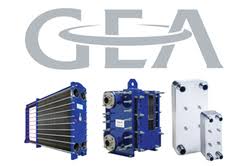
In addition, the process standards of each manufacturer are different. Some manufacturers have strict quality inspections in every process in accordance with the CE standard, and there are almost no defective products.
The technical level of each manufacturer is different. Some manufacturers use patented formulas to mix raw materials, raw and auxiliary materials in proportion for mixing and directly purchase finished rubber. The technical level of the mixing manufacturer is not at the same level.
Good raw materials and good craftsmanship create good quality. RPT adheres to the business philosophy of quality first, takes the international brand craftsmanship as the production standard, uses imported big-name raw materials, and produces rubber pads with the same quality as the original GEA factory. Now it has become a GA plate heat exchanger rubber gasket high-end alternative brands.
Related information
- Are you still looking for a good quality plate heat exchanger manufacturer? A one-stop shop allows you to experience something extraordinary
- What should you do to properly clean your plate and shell heat exchanger?
- Plate heat exchanger cleaning method of online cleaning CIP
- Physical characteristics of plate heat exchanger gasket
- Alfa Laval brand, who has widely used on everywhere are really good in operation?
- Qingdao Reapter pursues high-quality plates
Relevant article
- Semi-Welded Plate Heat Exchangers for Ammonia Refrigeration
- Variable Flow and Part-Load Operation of Plate Heat Exchangers
- Factory Acceptance Testing of Plate Heat Exchangers: What to Witness
- Plate Heat Exchanger Spare Parts Strategy: Stocking Against Real Lead Times
- Plate Heat Exchangers for Seawater and Brine Cooling: Materials and Limits
- Cross-Plate Leakage in a Plate Heat Exchanger: Diagnose Before You Order Parts
- Hygienic Design for Food-Grade Plate Heat Exchangers: What the Standards Require
- Plate Heat Exchanger Flow Arrangement: Series, Parallel and Multi-pass
- Fouling Allowance in Plate Heat Exchanger Design: Sizing the Margin
- Close Temperature Approach in Plate Heat Exchangers: How Close Is Practical?
Latest information
- The original lubricant in the chemical plate heat exchanger plays so many roles!
- Heat exchanger station supporting plate heat exchanger or have to pay attention to these points, or easily go wrong
- Heat station supporting plate heat exchanger installation is a technical work, these points should be noted
- Improve the efficiency of industrial boilers with plate heat exchanger, these maintenance points to keep in mind
- The Integrated Heat Exchanger Unit: An Efficient Integration and Intelligent Control Solution for Thermal Energy Conversion
- Sulfuric acid and other corrosive media for industrial plate heat exchanger requirements are what
- Simple and effective chemical cleaning method of coal chemical plate heat exchanger, can effectively improve efficiency
- A high-quality petrochemical plate heat exchanger in the production of what to consider
- These causes of chemical plate heat exchanger gasket aging you may not know
- Chemical plant plate heat exchanger, sulfuric acid cooling needs attention