What causes a plate cooler to leak?

The plate cooler will encounter many conditions when you use it, so what should you do when you encounter a leaking plate cooler? What about the solution? The following small compilation to explain to you.
1, scale too much: in addition to water quality components, if the plate oil cooler core accumulates a large amount of scale, will make its water flow speed slow and water temperature rise, thus leading to the phenomenon of dezincification of brass will also add according to the above factors, causing the precipitation of free 00I, strongly influenced the dezincification process.
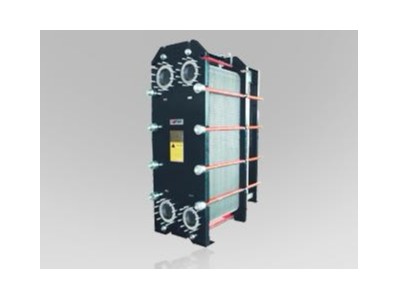
2, cooling water quality is not good: in some areas of the use of hard water as engine cooling water, with H62 brass material made of plate type oil, the oil is not good. The cooler core, which is easily damaged by corrosion, is the result of dezincification by yellow actinides, which results in a gradual reduction of the zinc content in the surface layer of the copper-zinc alloy. This is due to the dezincification produced by the yellow actinides, which causes the zinc content of the surface layer of the copper-zinc alloy to gradually decrease under certain conditions, resulting in porosity and corrosion. brittle copper layer. During the intense dezincification process, porosity is created in individual parts of the core. The dezincification becomes more pronounced as the bicarbonate content in the cooling water increases. At the same time, the hardness of the water and the chloride of the water string, also have a greater relationship with this phenomenon.
3, cylinder gas: in the plate oil cooler, from the cylinder pad into the exhaust gas in the waterway, because it contains carbon dioxide and sulfide. Therefore, the corrosive effect on the cooler core is also high. The exhaust gases in the cylinder escape in the event of a burst, when, due to the high pressure, even if the cylinder gasket is not visibly defective, the exhaust gases are It can also escape into the cooling system. This phenomenon, for the use of lower octane gasoline, easy to produce a sudden burst of gasoline engine is difficult to avoid.
The above is the editor for you to explain the causes of plate cooler leakage, I hope it can help you, if you have other aspects you want to know, you can consult us.
Related information
- Application of Alfa Laval plate heat exchanger in dairy processing industry
- An article to teach you the cleaning and maintenance skills of the heat station supporting plate heat exchanger
- What are the applications of plate and shell heat exchanger in the field of petroleum refining
- Waste heat recovery plate heat exchanger has many features, do you know which ones?
- How Chevron Angle Affects Plate Heat Exchanger Performance
- How exactly does a plate heat exchanger last up to 10 years?
Relevant article
- Plate Heat Exchanger Connections: DN vs NPS, PN vs Class, and What Goes Wrong on Site
- Free Cooling with Plate Heat Exchangers: Design and Changeover
- Multi-Section Plate Heat Exchangers: Two Duties, One Frame
- Retrofitting a Shell-and-Tube with a Plate Heat Exchanger: Fitting the Duty into an Existing Plant
- Packing a Plate Heat Exchanger for Ocean Freight: Preservation, Storage and Site Handover
- Plate Heat Exchangers Under Vacuum: Operating on the Negative-Pressure Side
- Gasket Compression Set and Bolt Torque Management in Plate Heat Exchangers
- Parallel Plate Heat Exchanger Banks: N+1 Redundancy and Flow Balancing
- Reading a Water Analysis Before You Specify a Plate Heat Exchanger
- High-Temperature Heat Pumps Above 100 °C: Exchanger Selection for Steam Replacement
Latest information
- The original lubricant in the chemical plate heat exchanger plays so many roles!
- Heat exchanger station supporting plate heat exchanger or have to pay attention to these points, or easily go wrong
- Heat station supporting plate heat exchanger installation is a technical work, these points should be noted
- Improve the efficiency of industrial boilers with plate heat exchanger, these maintenance points to keep in mind
- The Integrated Heat Exchanger Unit: An Efficient Integration and Intelligent Control Solution for Thermal Energy Conversion
- Sulfuric acid and other corrosive media for industrial plate heat exchanger requirements are what
- Simple and effective chemical cleaning method of coal chemical plate heat exchanger, can effectively improve efficiency
- A high-quality petrochemical plate heat exchanger in the production of what to consider
- These causes of chemical plate heat exchanger gasket aging you may not know
- Chemical plant plate heat exchanger, sulfuric acid cooling needs attention