What to look for when using a plate heat exchanger

Plate heat exchanger is now widely used in many industries in China, but some friends in the use of plate heat exchanger will encounter a lot of failure, the following editor to explain the plate heat exchanger in the use of the time to pay attention to some places.
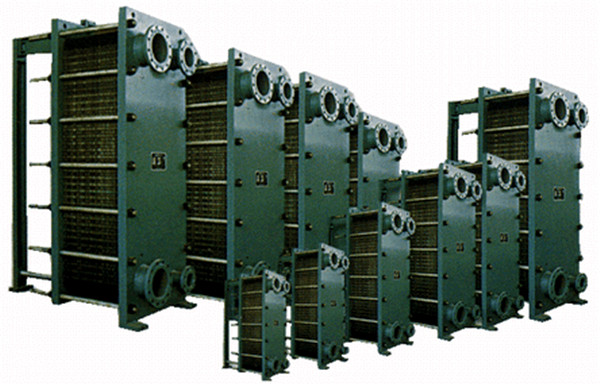 1.Before use should check whether the clamping bolt is loose, such as loose should be clamping bolt.
2.Before starting, open all the outlet valves of the heat exchanger and close the inlet valves of the heat exchanger. After starting the pump, open the inlet valve of heat exchanger slowly to increase the flow and pressure gradually to avoid local high pressure caused by instantaneous shock. Damage to the equipment.
3.Heat exchanger operation, in order to prevent overpressure on one side, the heat exchanger should be hot and cold medium inlet valve open at the same time, or first slowly Inject the low-pressure fluid, then slowly inject the high-pressure side of the fluid.
4. According to the reading of the thermometer at the inlet and outlet of the heat exchanger, use the valve to control the flow of hot and cold fluid in order to achieve the required process parameters, and then slowly inject the fluid into the high pressure side. Stable operation.
5. There should be a bleeder valve in the piping system, and the air in the equipment should be discharged after starting, to prevent the air from staying in the equipment and reduce the heat transfer. Effect.
6 hot and cold media such as large particles of sediment or other debris should be advanced filtration, prohibit the use of sewage for hydraulic testing and operation. In case it affects the life of the heat exchanger.
7. When the temperature difference between the two media, the first into the low-temperature medium, after the high-temperature medium, in case of downtime or power failure should be immediately switched off the high-temperature The inlet valve for the medium must be properly sealed and leakproof to avoid premature aging of the gasket at high temperatures on one side. and then turn off the low temperature medium.
The above is the editor for everyone love to explain the plate heat exchanger in the use of time need to pay attention to some places, hope to help you, if you have other aspects want to understand, you can come to consult us.
Related information
- Choosing quality plate heat exchanger manufacturers also have tricks
- Understand the operation control of heat exchanger
- Shandong Hengbang uses Ripute semi-welded evaporator and condenser case
- Ruipute Quality Manufacturing-Plates of plate Heat Exchanger
- Key Advantages for Plate Heat Exchangers
- Plate heat exchanger corrugated plate to prevent deformation under pressure
Relevant article
- Plate Heat Exchangers in Thermal Oil Systems: Seals, Film Temperature and When to Weld
- Water Hammer and Pressure Surges in Plate Heat Exchangers: Causes and Countermeasures
- Plate Heat Exchanger vs Shell-and-Tube Cleaning: Where the Lifetime Cost Diverges
- Plate Heat Exchanger Connections: DN vs NPS, PN vs Class, and What Goes Wrong on Site
- Free Cooling with Plate Heat Exchangers: Design and Changeover
- Multi-Section Plate Heat Exchangers: Two Duties, One Frame
- Retrofitting a Shell-and-Tube with a Plate Heat Exchanger: Fitting the Duty into an Existing Plant
- Packing a Plate Heat Exchanger for Ocean Freight: Preservation, Storage and Site Handover
- Plate Heat Exchangers Under Vacuum: Operating on the Negative-Pressure Side
- Gasket Compression Set and Bolt Torque Management in Plate Heat Exchangers
Latest information
- Chemical Plate Heat Exchanger: Lubricant Roles & Care
- Heat Station Plate Heat Exchangers: Design & Application
- Heat Station Plate Heat Exchangers: Installation Guide
- Boiler Plate Heat Exchangers: Maintenance Guide
- The Integrated Heat Exchanger Unit: An Efficient Integration and Intelligent Control Solution for Thermal Energy Conversion
- Sulfuric Acid Plate Heat Exchangers: Design & Application
- Coal Chemical Plate Heat Exchangers: Cleaning & Maintenance
- Petrochemical Plate Heat Exchangers: Design & Application
- Chemical Plate Heat Exchangers: Gasket Ageing
- Sulfuric Acid Plate Heat Exchangers: Design & Application