Food Plate Heat Exchangers: Manufacturer Selection

The world is changing rapidly, and global food consumption patterns are also changing.
In 2050, the global population will reach 9.6 billion, so the food industry will play an unprecedentedly important role.
Obviously, this is an excellent time for companies that can meet the changing eating habits and tastes of the future population.
Innovative food is also one of the key factors driving the income growth of food companies in the next three years.
Food-grade plate heat exchangers support sanitary and efficient production of various products.
These equipments can cope with the difficult problems of complex ingredients and processing techniques with special processing requirements.
Heating, sterilization, and cooling are the most basic production processes in the food processing process. Food-grade plate heat exchangers are inevitably used. They are also food-grade plate heat exchanger manufacturers, but the quality of the production equipment is indeed different.
Kanban sheet raw materials: because it is processed for food, it is ultimately the food to be imported, so the materials used must meet the sanitary standard, all stainless steel is used, but the stainless steel material is also graded, the composition and content of trace elements in stainless steel,
It can ultimately lead to the length of the service life of the entire equipment and subsequent operating costs, so you must pay attention to the quality of stainless steel raw materials when purchasing heat exchangers.
Look at the quality of the rubber strips: the rubber strips play a sealing role in the entire heat exchange process, so the medium will definitely come into contact with the rubber strips during operation, especially for the heat exchange of food. The hygienic standards of the rubber strips are higher.
When using heat exchangers for food, be sure to ask about the procurement channels of the raw materials of the rubber strips. The quality of the raw materials determines the quality of the rubber compound. If the quality of the raw materials does not meet the standard, the produced rubber strips cannot meet the sanitary standard.
Since the establishment of the factory for 13 years, RPT has always adhered to the quality-oriented principle. In the production of food-grade plate heat exchangers, the production is strictly in accordance with the European standard quality management system, and the products have passed CE and ASME system certification; stainless steel
The procurement of raw materials follows recognised international standards, and raw material suppliers with foreign-funded background are selected to ensure the quality of raw materials; the production gasket production follows documented process standards and a strict quality-control system.
Refined raw materials and auxiliary materials are purchased from major international brands, and the food-grade gaskets produced by RPT are fully compliant with the US FDA standards.
In 2050, the global population will reach 9.6 billion, so the food industry will play an unprecedentedly important role.
Obviously, this is an excellent time for companies that can meet the changing eating habits and tastes of the future population.
Innovative food is also one of the key factors driving the income growth of food companies in the next three years.
Food-grade plate heat exchangers support sanitary and efficient production of various products.
These equipments can cope with the difficult problems of complex ingredients and processing techniques with special processing requirements.
Heating, sterilization, and cooling are the most basic production processes in the food processing process. Food-grade plate heat exchangers are inevitably used. They are also food-grade plate heat exchanger manufacturers, but the quality of the production equipment is indeed different.
Here are some tips for you to choose a plate heat exchanger, so that you can buy a better quality plate heat exchanger.
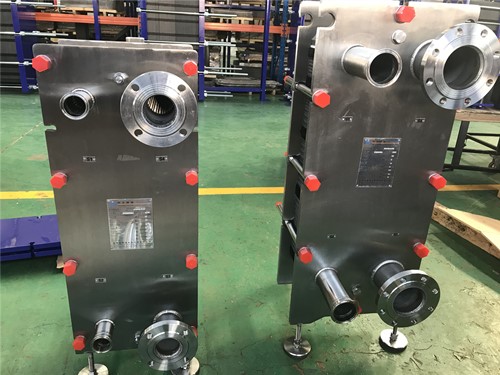
Kanban sheet raw materials: because it is processed for food, it is ultimately the food to be imported, so the materials used must meet the sanitary standard, all stainless steel is used, but the stainless steel material is also graded, the composition and content of trace elements in stainless steel,
It can ultimately lead to the length of the service life of the entire equipment and subsequent operating costs, so you must pay attention to the quality of stainless steel raw materials when purchasing heat exchangers.
Look at the quality of the rubber strips: the rubber strips play a sealing role in the entire heat exchange process, so the medium will definitely come into contact with the rubber strips during operation, especially for the heat exchange of food. The hygienic standards of the rubber strips are higher.
When using heat exchangers for food, be sure to ask about the procurement channels of the raw materials of the rubber strips. The quality of the raw materials determines the quality of the rubber compound. If the quality of the raw materials does not meet the standard, the produced rubber strips cannot meet the sanitary standard.
Since the establishment of the factory for 13 years, RPT has always adhered to the quality-oriented principle. In the production of food-grade plate heat exchangers, the production is strictly in accordance with the European standard quality management system, and the products have passed CE and ASME system certification; stainless steel
The procurement of raw materials follows recognised international standards, and raw material suppliers with foreign-funded background are selected to ensure the quality of raw materials; the production gasket production follows documented process standards and a strict quality-control system.
Refined raw materials and auxiliary materials are purchased from major international brands, and the food-grade gaskets produced by RPT are fully compliant with the US FDA standards.
【Paper label】:food grade plate heat exchanger
Related information
- Two simple steps to teach you to clean and maintain the plate heat exchanger correctly:
- Industrial Plate Heat Exchangers: Working Principle
- Refrigeration Plate Heat Exchangers: Key Advantages
- Shandong production of titanium palladium, Hastelloy alloy, 254SMO, nickel plate and other plate heat exchanger plate manufacturers
- Plate heat exchanger manufacturers to reveal your secret - plate heat exchanger rubber gasket processing technology
- To balance the heat loss of the pool, what will the swimming pool plate heat exchanger needs to do?
Relevant article
- Gasketed, Semi-Welded or Fully Welded: Choosing Plate Heat Exchanger Construction for the Duty
- Gasket Shelf Life and Storage: Keeping Spare Plate Heat Exchanger Gaskets Fit for Duty
- Plate Heat Exchangers in MVR Evaporation: Designing Around a Small Driving Force
- Plate Heat Exchangers in Sugar Mills: Juice Heating, Evaporation Support and Molasses Cooling
- Plate Heat Exchangers in Pulp and Paper Mills: Duties, Fibre, Fouling and Materials
- Flow-Induced Vibration in Plate Heat Exchangers: Causes, Damage Patterns and Fixes
- Plate Heat Exchangers in Thermal Oil Systems: Seals, Film Temperature and When to Weld
- Water Hammer and Pressure Surges in Plate Heat Exchangers: Causes and Countermeasures
- Plate Heat Exchanger vs Shell-and-Tube Cleaning: Where the Lifetime Cost Diverges
- Plate Heat Exchanger Connections: DN vs NPS, PN vs Class, and What Goes Wrong on Site
Latest information
- Chemical Plate Heat Exchanger: Lubricant Roles & Care
- Heat Station Plate Heat Exchangers: Design & Application
- Heat Station Plate Heat Exchangers: Installation Guide
- Boiler Plate Heat Exchangers: Maintenance Guide
- The Integrated Heat Exchanger Unit: An Efficient Integration and Intelligent Control Solution for Thermal Energy Conversion
- Sulfuric Acid Plate Heat Exchangers: Design & Application
- Coal Chemical Plate Heat Exchangers: Cleaning & Maintenance
- Petrochemical Plate Heat Exchangers: Design & Application
- Chemical Plate Heat Exchangers: Gasket Ageing
- Sulfuric Acid Plate Heat Exchangers: Design & Application