Plate heat exchanger cleaning method of online cleaning CIP

As we all know, the plate heat exchanger cleaning methods are divided into two, one is split cleaning, the other is online cleaning, CIP, also called in situ cleaning. Because splitting is time-consuming and laborious and can sometimes cause unforeseen damage to equipment, we opt for online cleaning.
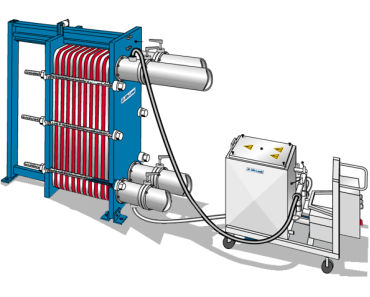
The benefits of online cleaning are threefold.
1 The equipment can be cleaned without disassembling it, avoiding damage during the disassembly process.
2 There is no need to arrange manpower for special dismantling and installation, which directly reduces economic costs.
3 It can be cleaned anytime and anywhere, and regular maintenance is beneficial to the service life of the plant equipment.
4 Make the stopping time for plate heat exchangers shorter, with the least possible impact on production.
The main configurations of the in-line cleaning equipment are: liquid tank, circulation pump, control box, valves, filters, trolley and piping system.
Under the guidance of energy saving, emission reduction and resource recycling policies, it is important to increase the recovery and utilization of energy, the market demand for plate heat exchangers in this excellent application is becoming greater.
Related information
- Industrial Plate Heat Exchangers: Custom Design
- Factory Acceptance Testing of Plate Heat Exchangers: What to Witness
- What are the factors that affect the operating performance of a water-water plate heat exchanger?
- Commissioning a Plate Heat Exchanger: A Field Checklist
- Application of sealing rubber gasket in plate heat exchanger
- Plate Heat Exchangers: Gasket Selection
Relevant article
- Gasketed, Semi-Welded or Fully Welded: Choosing Plate Heat Exchanger Construction for the Duty
- Gasket Shelf Life and Storage: Keeping Spare Plate Heat Exchanger Gaskets Fit for Duty
- Plate Heat Exchangers in MVR Evaporation: Designing Around a Small Driving Force
- Plate Heat Exchangers in Sugar Mills: Juice Heating, Evaporation Support and Molasses Cooling
- Plate Heat Exchangers in Pulp and Paper Mills: Duties, Fibre, Fouling and Materials
- Flow-Induced Vibration in Plate Heat Exchangers: Causes, Damage Patterns and Fixes
- Plate Heat Exchangers in Thermal Oil Systems: Seals, Film Temperature and When to Weld
- Water Hammer and Pressure Surges in Plate Heat Exchangers: Causes and Countermeasures
- Plate Heat Exchanger vs Shell-and-Tube Cleaning: Where the Lifetime Cost Diverges
- Plate Heat Exchanger Connections: DN vs NPS, PN vs Class, and What Goes Wrong on Site
Latest information
- Chemical Plate Heat Exchanger: Lubricant Roles & Care
- Heat Station Plate Heat Exchangers: Design & Application
- Heat Station Plate Heat Exchangers: Installation Guide
- Boiler Plate Heat Exchangers: Maintenance Guide
- The Integrated Heat Exchanger Unit: An Efficient Integration and Intelligent Control Solution for Thermal Energy Conversion
- Sulfuric Acid Plate Heat Exchangers: Design & Application
- Coal Chemical Plate Heat Exchangers: Cleaning & Maintenance
- Petrochemical Plate Heat Exchangers: Design & Application
- Chemical Plate Heat Exchangers: Gasket Ageing
- Sulfuric Acid Plate Heat Exchangers: Design & Application