Choosing a PHE Manufacturing Partner in Qingdao

Sondex plate heat exchanger has a big fan in China, just like other brands of heat exchange equipment, it is used in HVAC, energy, waste heat recovery, electricity, refrigeration, textile and heating of ocean-going ships.
Heat transfer conditions such as refrigeration, condensation, and evaporation are widely used.
Just like other brands, the original Sandex plate heat exchanger is very expensive. If you want to choose a replacement or consider a domestic brand.
The characteristic of Sondex plate changer is that the heat exchanger with the same corner hole size and width has a variety of height plate types, so the combination of different aspect ratios can meet the use of different heat exchange conditions, and the application flexibility is free.
Needless to say.
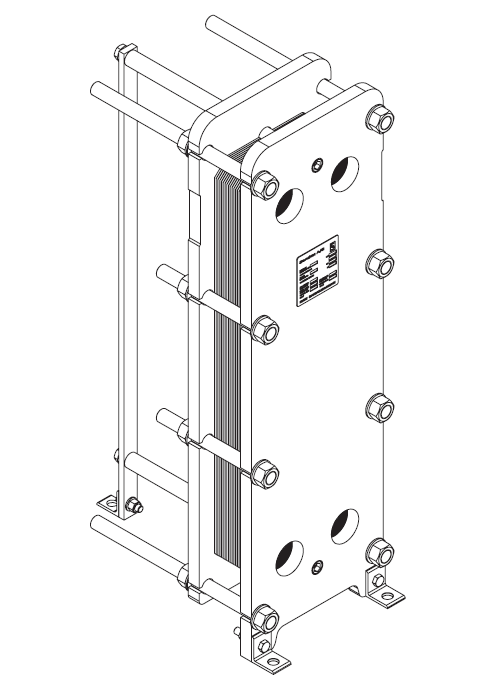
Qingdao RPT can take the lead in the perfect replacement of Sondex plate heat exchangers, which is firstly reflected in the rich plate types, which can provide a more economical and economical combination; secondly, the scientific selection, the use of the original factory selection software also allows
The rationality of the design has been raised to the level of a major international brand.
Finally, the level of processing and manufacturing.
Empty talk will lead to the wrong country, but hard work will rejuvenate the country.
Only when all the technical points are put into practice and the characteristics of board swaps are fully reflected in the processing and manufacturing can it be convincing.
At this point, Qingdao Ripter is clearly qualified.
The replacement of Qingdao Sondex plate heat exchanger has to be that Qingdao RPT has almost the same ability as the original factory in terms of technical strength and processing and manufacturing level, and it can be even better in other aspects.
Of course, you have to visit us to know these.
Okay, let’s briefly talk about it today, and I will give a detailed explanation on the Sandex plate heat exchanger next day, so that your understanding will be more comprehensive.
Related information
- Heat Transfer Efficiency for Plate Heat Exchangers
- Knowing these three points you can easily distinguish which plate heat exchangers are good
- Plate Heat Exchanger Spare Parts Strategy: Stocking Against Real Lead Times
- Plate Heat Exchangers: Selection Guide
- Food Plate Heat Exchangers: Applications
- Plate Heat Exchangers: Dismantling Guide
Relevant article
- Plate Heat Exchangers in Thermal Oil Systems: Seals, Film Temperature and When to Weld
- Water Hammer and Pressure Surges in Plate Heat Exchangers: Causes and Countermeasures
- Plate Heat Exchanger vs Shell-and-Tube Cleaning: Where the Lifetime Cost Diverges
- Plate Heat Exchanger Connections: DN vs NPS, PN vs Class, and What Goes Wrong on Site
- Free Cooling with Plate Heat Exchangers: Design and Changeover
- Multi-Section Plate Heat Exchangers: Two Duties, One Frame
- Retrofitting a Shell-and-Tube with a Plate Heat Exchanger: Fitting the Duty into an Existing Plant
- Packing a Plate Heat Exchanger for Ocean Freight: Preservation, Storage and Site Handover
- Plate Heat Exchangers Under Vacuum: Operating on the Negative-Pressure Side
- Gasket Compression Set and Bolt Torque Management in Plate Heat Exchangers
Latest information
- Chemical Plate Heat Exchanger: Lubricant Roles & Care
- Heat Station Plate Heat Exchangers: Design & Application
- Heat Station Plate Heat Exchangers: Installation Guide
- Boiler Plate Heat Exchangers: Maintenance Guide
- The Integrated Heat Exchanger Unit: An Efficient Integration and Intelligent Control Solution for Thermal Energy Conversion
- Sulfuric Acid Plate Heat Exchangers: Design & Application
- Coal Chemical Plate Heat Exchangers: Cleaning & Maintenance
- Petrochemical Plate Heat Exchangers: Design & Application
- Chemical Plate Heat Exchangers: Gasket Ageing
- Sulfuric Acid Plate Heat Exchangers: Design & Application