Can plate heat exchangers be used in this way? What about your heat transfer oil conditions, slag flushing conditions, etc.

Friends who are concerned about industry and technology should have recently learned a piece of news-my country's first high-efficiency compact sodium-supercritical carbon dioxide printed circuit board heat exchanger has been successfully developed.
The plate heat exchanger has gone through more than one hundred years so far, but its technological innovation is still in the sunrise stage, and there are many application scenarios to be developed.
We believe that plate heat exchangers will be used in more and more industrial, chemical, and physical directions in the future.
So today we will talk about why heat exchangers can be applied to many scenarios.
The birth of the heat exchanger itself originated from an awareness of energy conservation. It is a design combination of plates that allows the two media to flow in the heat exchanger without mixing, so that the required media
, The invention that reached the design temperature.
For example, when beer is being filled, it needs to be bottled at a low temperature. Wouldn't it be uneconomical if it consumes electricity for cooling?
At this time, the heat exchanger can play a role.
As a plate heat exchanger with outstanding abilities in all aspects, it is favored under various trade-offs such as heat exchange efficiency, maintenance cost, and floor space.
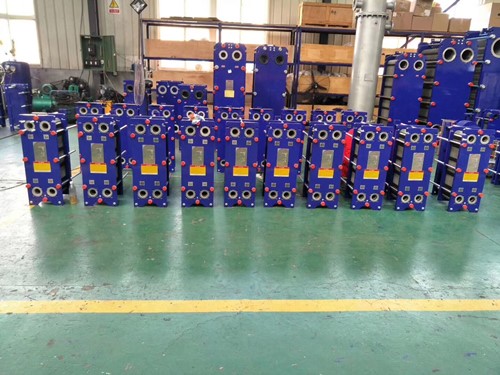
For example, ships operating at sea need to cool marine oil from time to time, but it is not practical to use fresh water to cool the oil. Therefore, using titanium instead of stainless steel to cool seawater, using plate instead of tube, it occupies a small area and consumes less natural raw materials.
Is it cost-effective and convenient?
In the field of scientific research, we cannot achieve the niche conditions in the news, but our corporate mission is to allow more people to use international-quality plate heat exchangers. This is our pursuit.
So if you have any working conditions that need to be selected urgently, there is no need to worry about whether we can do it or not. This should be a problem for manufacturers to consider. We can only guarantee that in the fields of industry, medicine, chemistry, etc., we design and produce plate heat exchangers
Is professional.
Related information
- Plate Heat Exchanger Pressure Drop: Steam Service | REAPTER
- China plate heat exchanger plates enter to a new level
- HVAC Plate Heat Exchangers: Design & Application
- Acceptance requirements for pressure testing of heat exchangers
- Causes of heat exchanger gasket aging
- The principle of plate heat exchanger of HVAC
Relevant article
- Plate Heat Exchangers in Thermal Oil Systems: Seals, Film Temperature and When to Weld
- Water Hammer and Pressure Surges in Plate Heat Exchangers: Causes and Countermeasures
- Plate Heat Exchanger vs Shell-and-Tube Cleaning: Where the Lifetime Cost Diverges
- Plate Heat Exchanger Connections: DN vs NPS, PN vs Class, and What Goes Wrong on Site
- Free Cooling with Plate Heat Exchangers: Design and Changeover
- Multi-Section Plate Heat Exchangers: Two Duties, One Frame
- Retrofitting a Shell-and-Tube with a Plate Heat Exchanger: Fitting the Duty into an Existing Plant
- Packing a Plate Heat Exchanger for Ocean Freight: Preservation, Storage and Site Handover
- Plate Heat Exchangers Under Vacuum: Operating on the Negative-Pressure Side
- Gasket Compression Set and Bolt Torque Management in Plate Heat Exchangers
Latest information
- Chemical Plate Heat Exchanger: Lubricant Roles & Care
- Heat Station Plate Heat Exchangers: Design & Application
- Heat Station Plate Heat Exchangers: Installation Guide
- Boiler Plate Heat Exchangers: Maintenance Guide
- The Integrated Heat Exchanger Unit: An Efficient Integration and Intelligent Control Solution for Thermal Energy Conversion
- Sulfuric Acid Plate Heat Exchangers: Design & Application
- Coal Chemical Plate Heat Exchangers: Cleaning & Maintenance
- Petrochemical Plate Heat Exchangers: Design & Application
- Chemical Plate Heat Exchangers: Gasket Ageing
- Sulfuric Acid Plate Heat Exchangers: Design & Application