Application of plate heat exchanger unit system

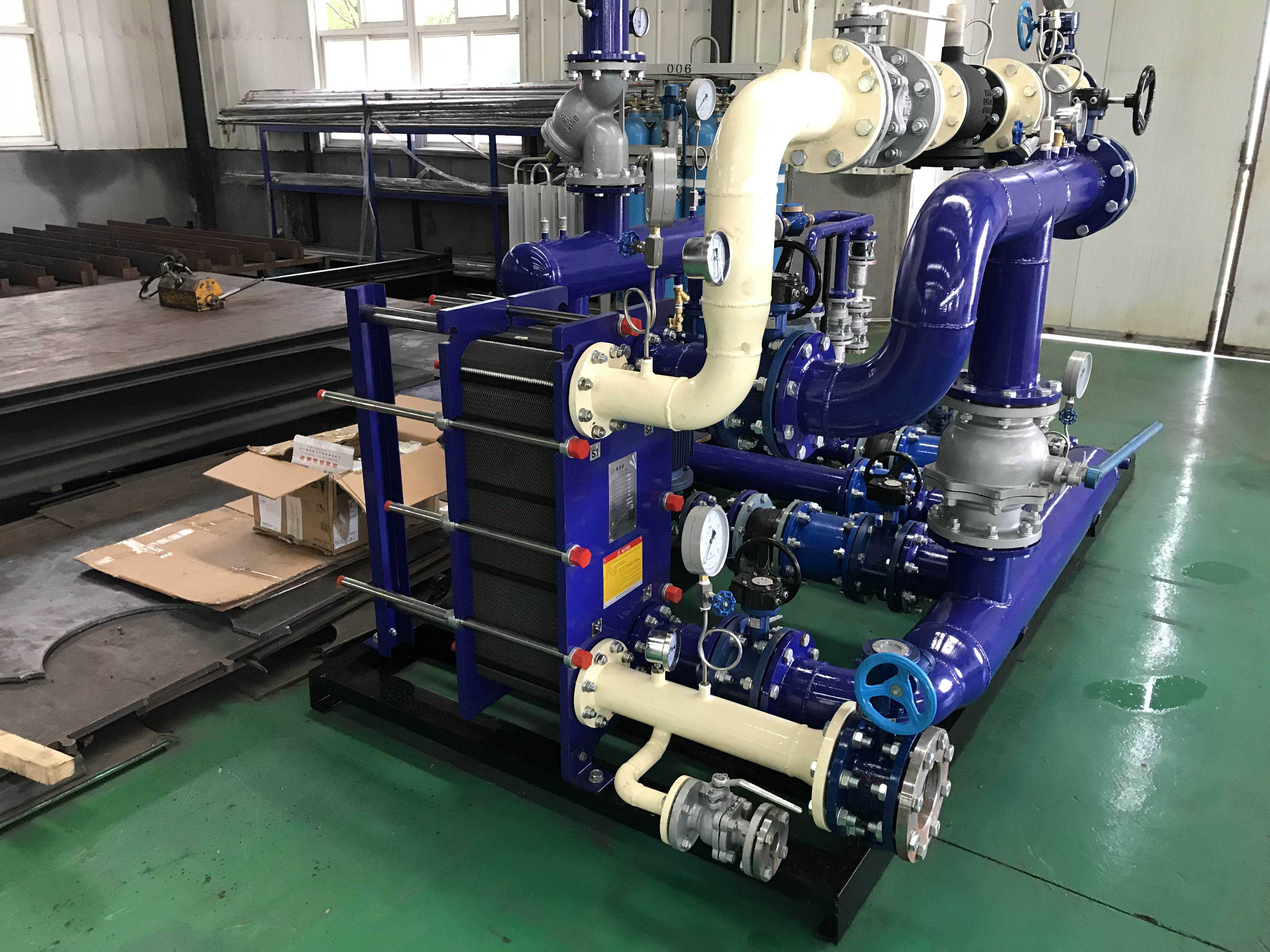
Recently, Ruipute Qingdao has delivered a plate heat exchanger unitto a customer, mainly for use in cell heat transfer stations. In recent years, centralized heating has been sufficiently developed, and the heat exchange unit, as a key point connecting the heat network system and the user system, has become the most important part of the whole heat exchange system in series.
The main heat sources in the heat exchange unit system are cogeneration or boiler room, primary pipe network, secondary pipe network, heat exchange station, control center and heat user. Hot users mainly include, industrial enterprises, villas, office buildings, and apartment homes. The heating network is first drawn from the heat source to the heat exchange station, which is characterized by high temperature and small pipe diameter. called the primary pipe network. The pipes from the heat exchange station to the user, with low temperatures and large pipe diameters, become a secondary pipe network.
Plate heat exchanger unit is mainly composed of water pump, shut-off valve, soft connection, instrumentation, electric control, plate heat exchanger as the core. The principle of heat transfer is that the secondary side of low temperature return water after decontamination, through the circulation pump, into the heat exchanger, absorb the heat of the heat medium, the water supply reaches the set temperature, flow to the heating pipe network for heat transfer. The primary side heat medium enters the heat exchanger, and after heat exchange with the secondary side medium, the return pipe returns to the heat source, and after heating, then participate in heat exchange, and so on and so forth.
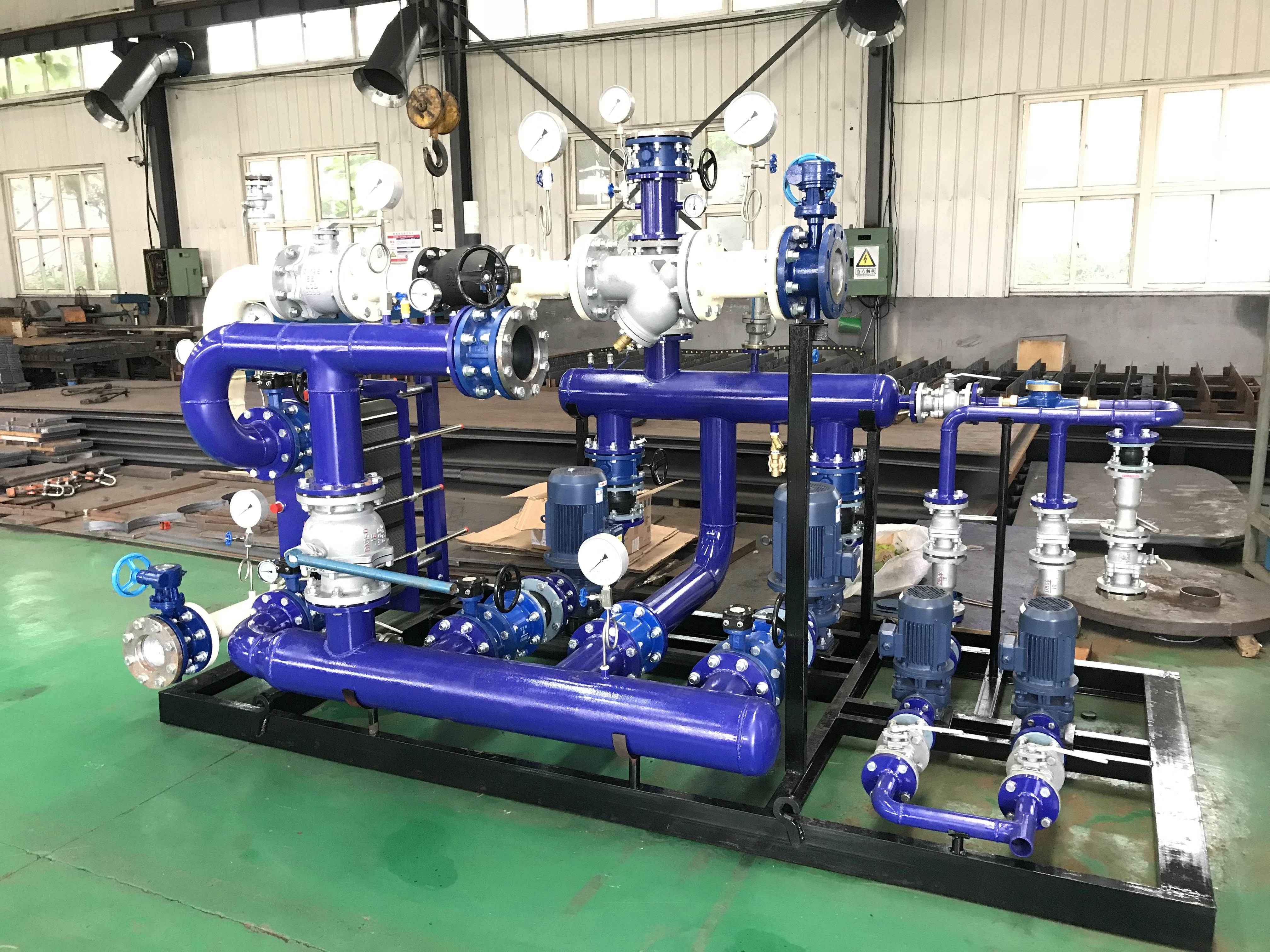
The role of the plate heat exchanger in the whole unit is to transfer heat energy from the heat network system to the user system, play a series connection and conversion role, so as to meet the user's heating and domestic water needs.
The operation of the control center controls the interaction between the valves and the heat exchanger, thus improving the heat transfer efficiency. The operational stability of the entire plate heat exchanger unit will also be greatly improved.
Related information
- When choosing a plate and shell heat exchanger, you must understand its components and materials
- Waste Heat Recovery Plate Heat Exchangers: Applications
- Plate Heat Exchangers in Data Center Liquid Cooling: CDU Selection
- Interview with Reapter, China's most influential plate heat exchanger manufacturer
- Heating Plate Heat Exchangers: Design & Application
- Plate Heat Exchangers: Double-Wall Design
Relevant article
- Plate Heat Exchangers in Thermal Oil Systems: Seals, Film Temperature and When to Weld
- Water Hammer and Pressure Surges in Plate Heat Exchangers: Causes and Countermeasures
- Plate Heat Exchanger vs Shell-and-Tube Cleaning: Where the Lifetime Cost Diverges
- Plate Heat Exchanger Connections: DN vs NPS, PN vs Class, and What Goes Wrong on Site
- Free Cooling with Plate Heat Exchangers: Design and Changeover
- Multi-Section Plate Heat Exchangers: Two Duties, One Frame
- Retrofitting a Shell-and-Tube with a Plate Heat Exchanger: Fitting the Duty into an Existing Plant
- Packing a Plate Heat Exchanger for Ocean Freight: Preservation, Storage and Site Handover
- Plate Heat Exchangers Under Vacuum: Operating on the Negative-Pressure Side
- Gasket Compression Set and Bolt Torque Management in Plate Heat Exchangers
Latest information
- Chemical Plate Heat Exchanger: Lubricant Roles & Care
- Heat Station Plate Heat Exchangers: Design & Application
- Heat Station Plate Heat Exchangers: Installation Guide
- Boiler Plate Heat Exchangers: Maintenance Guide
- The Integrated Heat Exchanger Unit: An Efficient Integration and Intelligent Control Solution for Thermal Energy Conversion
- Sulfuric Acid Plate Heat Exchangers: Design & Application
- Coal Chemical Plate Heat Exchangers: Cleaning & Maintenance
- Petrochemical Plate Heat Exchangers: Design & Application
- Chemical Plate Heat Exchangers: Gasket Ageing
- Sulfuric Acid Plate Heat Exchangers: Design & Application